I started using vitamin E oil on a whim after a dermatologist offhandedly mentioned it during a routine checkup — and two months later, I was genuinely surprised by what I noticed.
It wasn’t a dramatic transformation. My skin didn’t suddenly look twenty years younger. But the rough, dry patches on my elbows disappeared. The small scar on my forearm from a kitchen accident looked noticeably softer. And my face, which tends to feel tight and irritated by mid-afternoon, started holding moisture better through the day.
That’s the thing about vitamin E for skin — it doesn’t make headlines the way retinol or vitamin C does, but it’s quietly one of the most well-researched, versatile skincare ingredients available. It’s been used in dermatology for decades, and it remains a staple in everything from drugstore lotions to high-end serums.
In this guide, you’ll learn what vitamin E actually does for your skin, how to use it correctly, which forms work best, what the science actually supports, and what you should realistically expect. No hype, just honest information you can act on.
Why Vitamin E Deserves a Spot in Your Skincare Routine
Vitamin E — technically a group of fat-soluble antioxidants called tocopherols — is one of the most studied nutrients in dermatology. Your skin naturally contains vitamin E, but environmental stressors like UV exposure, pollution, and oxidative stress deplete those stores over time.
According to research published in the journal Dermatologic Therapy, topical vitamin E is one of the most common antioxidants used in cosmetic formulations precisely because of its stability and its well-documented ability to protect the skin barrier and reduce lipid peroxidation — the process by which free radicals damage your skin’s fatty tissue.
Here’s why that matters for everyday life in the US right now: pollution levels in most American cities have increased over the past decade, and UV index averages are trending higher due to climate shifts. Your skin is working harder than ever to defend itself. Vitamin E helps refill that antioxidant defense system topically, even when diet and lifestyle don’t fully compensate.
It also plays well with others. Unlike some active ingredients that require careful timing or separation from other products, vitamin E is generally compatible with most skincare staples and can enhance their effectiveness — especially when paired with vitamin C.
The Real Benefits of Vitamin E for Skin (What the Research Says)
Let’s be specific. Here’s what vitamin E can reasonably do for your skin, backed by actual evidence:
1. Deep moisturization and barrier support. Vitamin E is an emollient, meaning it softens and smooths skin by filling in gaps between skin cells. A 2023 review from Mayo Clinic’s dermatology division confirmed that tocopherol-based formulas are effective for dry, flaky skin and are particularly useful for conditions like eczema and contact dermatitis when used as part of a broader routine.
2. Antioxidant protection from UV damage. Vitamin E doesn’t replace sunscreen — let’s be clear about that. But studies, including one from Stanford’s dermatology research group, show that topical vitamin E reduces UV-induced skin damage when used alongside SPF. It essentially boosts photoprotection at the cellular level.
3. Scar and wound healing support. This is the most debated benefit, and the evidence is mixed. Some studies show that vitamin E accelerates wound closure and improves the appearance of scars over time. Others show no significant benefit, particularly for raised or hypertrophic scars. The honest answer: it works for some people on some types of scars, especially newer, superficial ones. Don’t expect miracles on old, deep scarring.
4. Hyperpigmentation and dark spots. Vitamin E on its own is a modest brightening agent. It’s significantly more effective when combined with glycolic acid or vitamin C, where it stabilizes the formula and enhances overall brightening results.
5. Reducing fine lines and dryness-related aging. Because vitamin E is such a powerful moisturizer and antioxidant, consistent use helps minimize the appearance of fine lines caused by dehydration and environmental damage — not genetic aging, but the surface-level stuff that happens faster than it should.
How to Use Vitamin E for Skin: Forms, Timing, and Application
This is where a lot of people go wrong. Vitamin E isn’t a single product — it comes in multiple forms, and how you use it matters as much as the ingredient itself.
Vitamin E oil (pure tocopherol capsules or bottles): This is the most concentrated form. It’s thick, heavy, and occlusive — great for targeting specific areas like scars, dry elbows, cuticles, or cracked heels. Apply a small amount at night to clean, slightly damp skin on the areas you’re targeting. Using it all over your face can be too heavy for most skin types and may clog pores if you’re acne-prone.
Serums with vitamin E: These are more elegant formulas, usually combining tocopherol with other actives. If you’re interested in pairing vitamin E with vitamin C for brightening, look for serums labeled with both ingredients — the combination is scientifically validated to be more effective than either ingredient alone, as vitamin C regenerates oxidized vitamin E in the skin.
Moisturizers and creams: Most good moisturizers already contain some form of vitamin E. This is the easiest entry point and works well for all skin types. Check your current moisturizer’s ingredient list for "tocopherol" or "tocopheryl acetate."
Timing: Vitamin E is best used at night when your skin is in repair mode. If you’re using a vitamin E product in the morning, always layer SPF on top — vitamin E enhances UV protection but does not replace it. For layering guidance, check out the full breakdown on how to layer skincare products correctly.
How much to use: A little goes a long way with concentrated vitamin E oil. For spot treatment, one capsule is enough for a small area. For full-face use in a serum formula, 3-4 drops is plenty. More isn’t better — excess product can pill or feel greasy without added benefit.
Vitamin E and Skin Type: Who Benefits Most (and Who Should Be Careful)
Vitamin E isn’t a universal miracle ingredient for every skin type. Here’s an honest breakdown:
Dry and mature skin: This is where vitamin E really shines. The rich, emollient texture is deeply moisturizing, and the antioxidant benefits are especially valuable for skin that’s already showing signs of oxidative aging. People over 40 with dry or normal skin tend to see the most visible improvement.
Sensitive skin: Generally safe, but patch-test first. Some people with sensitive skin react to high-concentration vitamin E oil, particularly when applied near the eyes or on inflamed areas. A cream with a lower concentration is a safer starting point. If you’re managing sensitivity, this article on building a routine for sensitive skin covers how to introduce new ingredients without triggering reactions.
Oily and acne-prone skin: Proceed with caution. Pure vitamin E oil is comedogenic for many people — meaning it can block pores and contribute to breakouts. If you have oily or acne-prone skin, opt for a lightweight serum formulation rather than straight vitamin E oil, and avoid applying it to pore-heavy zones like the nose and chin.
Combination skin: Use targeted application. Apply vitamin E oil to drier areas (cheeks, under-eye, jawline) and avoid the T-zone. A gel-based serum with vitamin E is a better option for all-over use.
According to the American Academy of Dermatology, roughly 1-3% of people experience contact dermatitis from topical vitamin E. It’s not common, but it’s worth doing a 48-hour patch test on your inner forearm before applying it to your face.
Common Mistakes People Make With Vitamin E Skincare
Even a good ingredient can backfire if you’re not using it correctly. Here are the most frequent mistakes I see — and that the research backs up as real problems:
Mistake 1: Using pure vitamin E oil all over the face, every day. This is too much of a good thing for most skin types. The texture is occlusive enough to trap debris, contribute to milia (those tiny white bumps under the skin), and feel suffocating. Use it as a targeted treatment, not a full-face moisturizer, unless your skin is very dry and you’ve confirmed it doesn’t cause breakouts for you.
Mistake 2: Expecting it to erase old scars. The scar-fading benefits of vitamin E are real but modest and time-dependent. It works best on newer, healing wounds and shallow discoloration — not on deep, old, or raised scars. If you’ve been applying vitamin E to a decade-old scar and seeing nothing, that’s expected. Ingredients like azelaic acid may be more appropriate for stubborn hyperpigmentation.
Mistake 3: Skipping SPF because you’re using vitamin E. Vitamin E has photoprotective properties, but it is not a sunscreen. It has no SPF rating and cannot replace a broad-spectrum SPF 30 or higher. Skipping sunscreen while relying on antioxidants is one of the fastest ways to accelerate skin aging.
Mistake 4: Buying low-quality oils with oxidized vitamin E. Vitamin E oxidizes when exposed to light and air. Low-quality oils in clear bottles stored improperly are likely already degraded by the time you use them. Look for dark glass or opaque packaging, and check that the formula contains alpha-tocopherol (the most bioavailable form). Brands like Malin + Goetz, The Ordinary, and Sunday Riley use stable, well-formulated vitamin E in their products.
Mistake 5: Not giving it enough time. Vitamin E is not an overnight fix. For moisturization, you’ll feel a difference within days. For scar improvement or antioxidant benefits, give it at least 8-12 weeks of consistent use before evaluating.
Frequently Asked Questions About Vitamin E for Skin
Can I use vitamin E oil on my face every night?
If your skin is dry and non-acne-prone, yes — a small amount applied to clean skin at night can be beneficial. If you have oily or combination skin, limit it to two to three nights per week or use a lightweight vitamin E serum instead of the oil.
Does vitamin E lighten skin or fade dark spots?
On its own, vitamin E has mild brightening properties but isn’t a powerful skin-lightener. It works significantly better for this purpose when combined with vitamin C. For more aggressive dark spot correction, consider adding a brightening acid or a dedicated hyperpigmentation treatment to your routine.
Is it safe to use vitamin E around the eyes?
Many eye creams contain vitamin E, so yes — in formulated products, it’s generally safe for the eye area. Pure vitamin E oil, however, can be too thick and may cause milia around the delicate under-eye skin. Stick to eye-specific formulations if that’s your concern.
Can I break open a vitamin E capsule and apply it to my face?
Yes, this is a common DIY approach and generally safe for spot treatments. Just make sure the capsule contains pure tocopherol without added fillers, and use it sparingly. Apply it to a specific area rather than your entire face.
Does eating vitamin E-rich foods affect my skin?
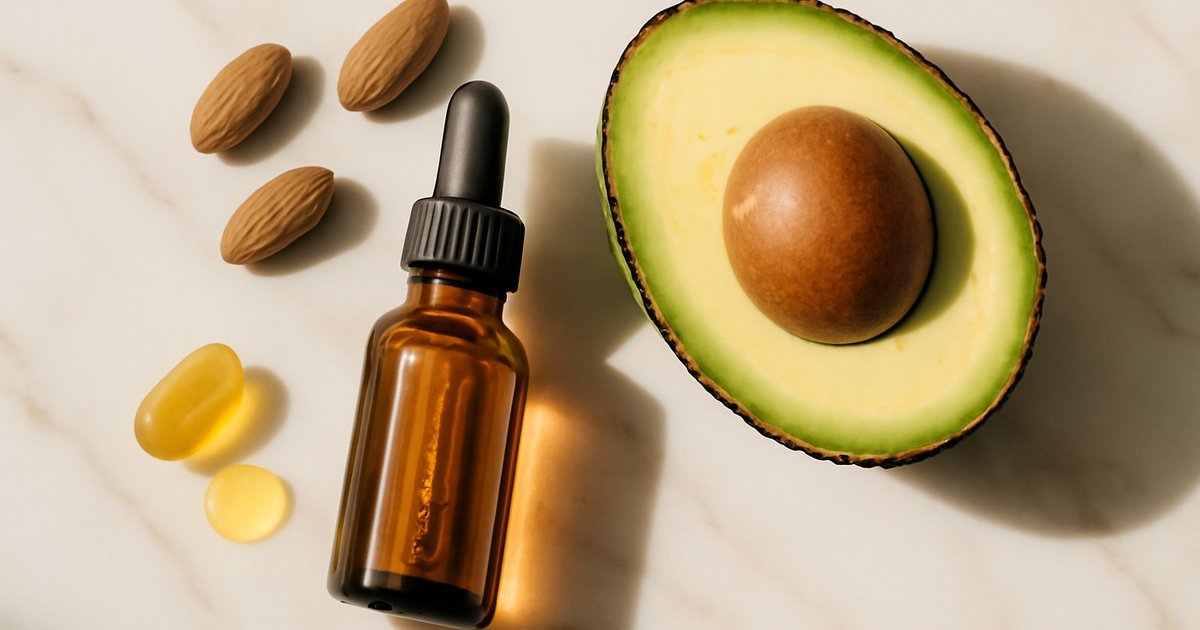
Yes, diet matters. Foods like almonds, sunflower seeds, avocado, and spinach are high in vitamin E and contribute to overall skin health from the inside out. But topical application delivers vitamin E directly to the skin’s surface layers, which dietary intake can’t fully replicate. Both approaches are valuable and complementary.
The Bottom Line on Vitamin E for Skin
Vitamin E has earned its place in skincare not because it’s trendy, but because it consistently delivers on a handful of meaningful, real-world benefits: better moisture retention, antioxidant defense, gentle scar support, and enhanced efficacy when combined with other actives.
It’s not the most dramatic ingredient in your routine. It won’t transform your skin in a week. But when used correctly — the right form, the right amount, for the right skin type — it quietly does its job every single night.
Start with a vitamin E serum or a moisturizer that already contains it. If your skin handles it well and you want more targeted benefits, try a pure oil on specific areas. Pair it with SPF during the day, and give it time to work.
Your skin doesn’t need more products. It needs the right ones, used consistently. Vitamin E just might be one of them.