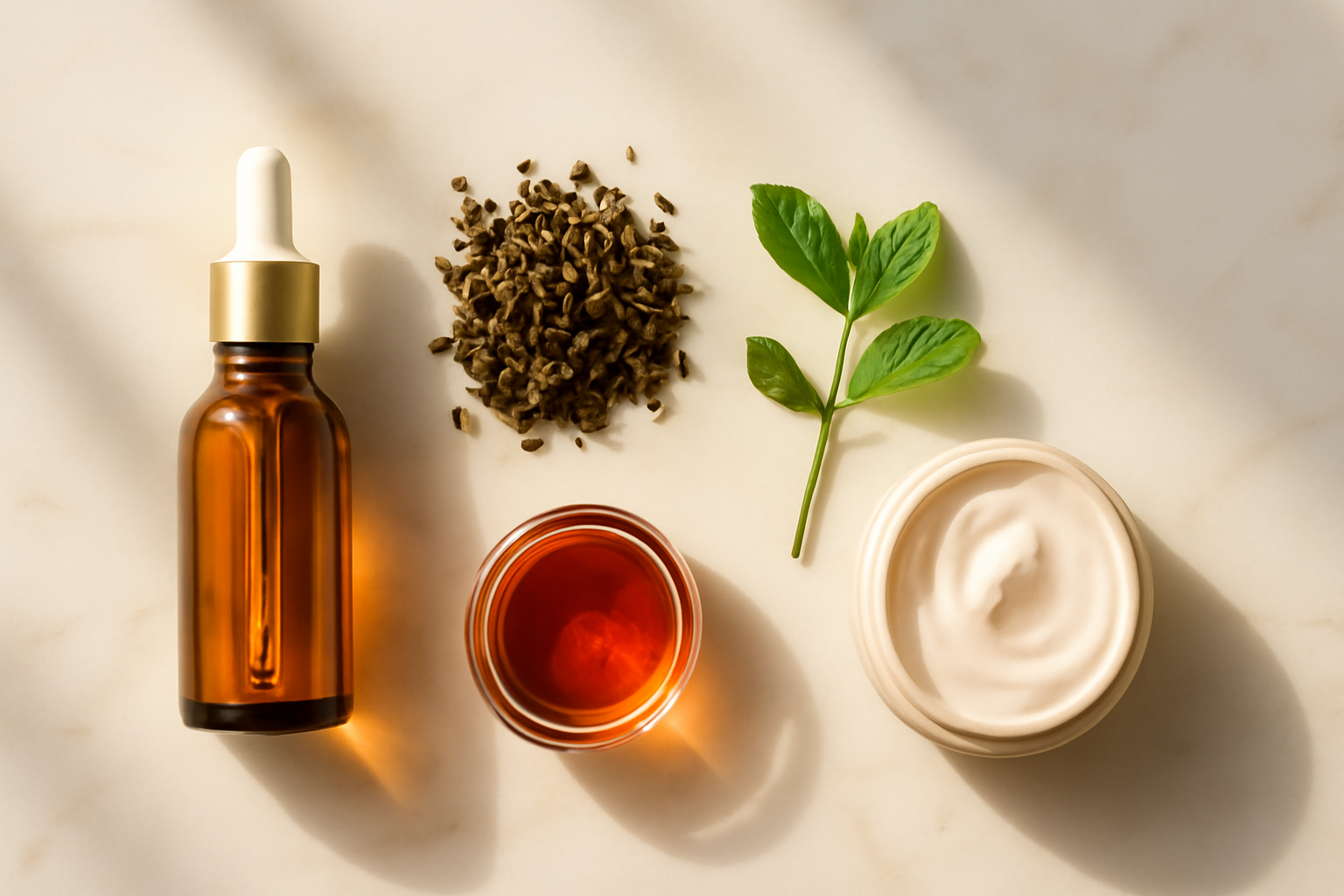
I used to spend a small fortune on serums with ingredient lists I couldn’t pronounce — until a dermatologist told me the truth about what my skin actually needed.
It started with a cabinet full of half-empty bottles and a complexion that still looked dull by Thursday. I was doing everything right — or so I thought. Cleanser, toner, three serums, SPF. But somewhere between the peptide complex and the bio-retinol blend, I lost track of what was actually helping and what was just expensive hope in a glass jar.
Here’s the thing: natural skincare ingredients have had a serious scientific moment in recent years. A 2025 report from the American Academy of Dermatology found that over 60% of adults are now actively seeking plant-based and naturally derived ingredients in their skincare — and dermatologists are catching up with the research to back it up.
But "natural" doesn’t automatically mean effective. And not everything marketed as clean or botanical will do what your skin actually needs.
This guide cuts through the noise. Whether you’re dealing with dryness, uneven tone, early signs of aging, or just want a simpler routine, you’ll learn which natural skincare ingredients are genuinely worth your time — and which ones are mostly marketing.
Why Natural Skincare Ingredients Are Getting Serious Attention
For years, "natural" skincare lived in the realm of essential oils and DIY face masks. Dermatologists mostly rolled their eyes. But the conversation has shifted considerably.
A growing body of peer-reviewed research — including studies published through Harvard Medical School’s Division of Dermatology — has validated several plant-derived compounds as genuinely effective at the cellular level. We’re talking about ingredients that influence collagen synthesis, reduce oxidative stress, and support the skin’s barrier function in measurable ways.
At the same time, US adults are more ingredient-conscious than ever. According to a 2024 Consumer Reports survey, 72% of Americans read product labels more carefully now than they did five years ago. People want to know what they’re putting on their skin — and why it works.
The good news? You don’t have to choose between "natural" and "effective." The best formulations today are bridging that gap with science-backed botanicals. But first, you need to know which ingredients are actually doing something — and which ones are just riding the clean beauty wave.
The Heavy Hitters: Natural Ingredients with Real Science Behind Them
Let’s start with the ingredients that have earned their spot in the research literature and, honestly, in your routine.
Vitamin C (L-Ascorbic Acid)
This is one of the most studied antioxidants in skincare, and the evidence is strong. Vitamin C neutralizes free radicals, brightens uneven skin tone, and stimulates collagen production. A clinical review published by the Mayo Clinic confirmed that topical Vitamin C at concentrations of 10-20% can significantly reduce the appearance of hyperpigmentation and fine lines over 12 weeks.
The catch? Stability. Vitamin C oxidizes quickly, which is why cheap Vitamin C serums often turn orange and stop working. Look for L-ascorbic acid formulas in opaque or dark glass packaging, or opt for more stable derivatives like ascorbyl glucoside if you have sensitive skin.
Niacinamide (Vitamin B3)
If there’s one ingredient a dermatologist is almost guaranteed to recommend, it’s niacinamide. It reduces redness, minimizes the appearance of pores, regulates sebum production, and strengthens the skin barrier. A 2024 study from Stanford’s dermatology department found it particularly effective for adults in their 30s and 40s dealing with combination or stressed skin.
Niacinamide is also remarkably gentle — it plays well with almost everything in your routine, including retinol and acids. If you’ve ever wanted one ingredient that does six things without drama, this is it.
Bakuchiol
Bakuchiol is derived from the seeds of the Babchi plant and has been getting serious clinical attention as a plant-based alternative to retinol. A landmark study published in the British Journal of Dermatology found that bakuchiol performed comparably to 0.5% retinol in reducing wrinkles and hyperpigmentation — with significantly less irritation.
This makes it especially worth considering if your skin doesn’t tolerate traditional retinoids well, or if you’re pregnant and avoiding retinol. It’s not a perfect one-to-one replacement, but for many adults, it gets the job done without the peeling and purging phase. If you’re building an anti-aging skincare routine, bakuchiol deserves a serious look.
Supporting Ingredients Worth Adding to Your Rotation
Beyond the heavy hitters, there’s a second tier of natural ingredients that provide meaningful benefits — especially when paired with the right routine.
Hyaluronic Acid
Technically produced by the body and also derived via fermentation, hyaluronic acid (HA) is one of the most effective humectants in skincare. It holds up to 1,000 times its weight in water, which means it pulls moisture into the skin and helps it stay there.
The key is application: HA works best on slightly damp skin, followed immediately by a moisturizer to seal it in. Applied to completely dry skin in a dry environment, it can actually pull moisture out of your skin. A small but important distinction that makes a big difference in results.
Green Tea Extract (EGCG)
Epigallocatechin gallate — EGCG — is the active compound in green tea that gives it antioxidant and anti-inflammatory properties. Research from the American Academy of Dermatology supports its use for calming reactive skin and reducing UV-induced oxidative stress. It’s not a sunscreen replacement, but as a daily antioxidant, it adds real value to your morning routine.
Rosehip Seed Oil
Cold-pressed rosehip oil is naturally rich in linoleic acid and trans-retinoic acid — a precursor to retinol that’s gentler on the skin. It’s particularly effective for fading post-acne marks and improving skin texture over time. Consumer Reports ranked it among the best-value facial oils in 2025, noting meaningful results without the premium price tag of synthetic alternatives.
Worth noting: rosehip oil is comedogenic for some people. If you’re prone to breakouts, patch-test for at least a week before committing. This is exactly the kind of trade-off that clean beauty marketing tends to gloss over.
How to Layer Natural Ingredients Without Overdoing It
Here’s where a lot of well-intentioned routines fall apart. People discover five incredible natural ingredients and immediately stack all of them into one routine — twice a day. The result? Irritation, breakouts, or just a pile of products doing nothing because they’re canceling each other out.
A practical framework that actually works:
Morning: Gentle cleanser → Vitamin C serum → Niacinamide moisturizer → SPF 30+. This combination targets oxidative stress and tone while protecting your skin from UV damage — the number one driver of premature aging.
Evening: Double cleanse if you wear SPF or makeup → Hyaluronic acid (on damp skin) → Bakuchiol or rosehip oil → Barrier-supportive moisturizer. This is where repair happens.
The American Academy of Dermatology recommends introducing new active ingredients one at a time, waiting at least two weeks before adding the next. Yes, it takes patience. But it also means you’ll actually know what’s working. If you want to see how this plays into a full evening approach, our guide on the best nighttime skincare routine covers the full layering order in detail.
And if mornings feel rushed, there are ways to simplify without sacrificing results — check out the best morning skincare routine for busy adults for a streamlined approach that fits real life.
Common Mistakes to Avoid with Natural Skincare
Even with the right ingredients, there are patterns that consistently undermine results. Here are the ones that come up most often.
Assuming "natural" means safe for all skin types. Lemon juice, undiluted essential oils, and even some plant extracts can cause chemical burns, contact dermatitis, or photosensitivity. The American Contact Dermatitis Society flags lavender and tea tree oil as among the most common natural allergens. Natural does not mean hypoallergenic. Patch test everything.
Skipping SPF because you’re using antioxidants. Vitamin C, green tea, and other antioxidants reduce oxidative damage from UV — they do not block UV rays. SPF is still non-negotiable, even on cloudy days. This is one of the most consistent messages in dermatology, and it hasn’t changed.
Expecting results in two weeks. Most active ingredients — even proven ones like Vitamin C and bakuchiol — require 8 to 12 weeks of consistent use before you see meaningful changes in tone and texture. The before-and-after content on social media rarely reflects this timeline. Set realistic expectations so you don’t abandon something that’s actually working.
Layering too many actives at once. Vitamin C and niacinamide were once thought to interact poorly together — that’s largely been debunked at moderate concentrations. But combining multiple exfoliating acids, or using bakuchiol and a strong retinoid simultaneously, is a recipe for barrier damage. Simpler routines tend to outperform complex ones in the long run.
Buying based on packaging and buzzwords. "Clean," "non-toxic," "100% natural," and "botanical" are not regulated terms in the US cosmetics industry. A product can be labeled any of these things without meeting any specific standard. Read the ingredient list — INCI names and all — and use tools like the Environmental Working Group’s Skin Deep database to verify what’s actually in the formula.
Frequently Asked Questions
Is bakuchiol as effective as retinol for anti-aging?
Research suggests bakuchiol delivers comparable results to low-concentration retinol (around 0.5%) in reducing fine lines and hyperpigmentation, with significantly less irritation. For sensitive skin types or those who can’t use retinol, it’s a well-supported alternative. For more severe concerns, prescription retinoids still lead the clinical evidence.
Can I use Vitamin C and niacinamide together?
Yes — earlier concerns about these two ingredients interacting negatively have been largely addressed by updated research. At typical formulation concentrations, they can be used in the same routine. If you notice any flushing or irritation, apply niacinamide after Vitamin C has fully absorbed.
How long does it take to see results from natural skincare ingredients?
Most dermatologists recommend a minimum of 8 weeks of consistent use before evaluating an ingredient’s impact. Some changes — like improved hydration — appear faster. Collagen-related improvements and significant tone correction typically take 12 weeks or longer.
Are natural skincare ingredients safe during pregnancy?
Many are, but not all. Retinol and retinoids (including some forms of Vitamin A) are generally avoided during pregnancy. Bakuchiol, hyaluronic acid, niacinamide, and green tea extract are typically considered safer alternatives — but always confirm with your OB-GYN before making changes to your routine during pregnancy.
Do expensive natural skincare products work better than drugstore options?
Not necessarily. Ingredient concentration, formulation stability, and pH matter far more than brand prestige or price point. A well-formulated Vitamin C serum at $22 can outperform a $90 version in poor packaging. Consumer Reports has consistently found that several drugstore options match or beat luxury counterparts in clinical performance testing.
Your Next Step Toward Simpler, Smarter Skincare
The most effective natural skincare routine isn’t the most complicated one — it’s the one you actually stick to, built around ingredients that have real science behind them.
Start with one or two proven ingredients: a Vitamin C serum in the morning, a bakuchiol or rosehip oil at night. Add niacinamide when your skin has adjusted. Give everything at least two full months before judging. And always — always — wear sunscreen.
You don’t need twenty products. You need the right five, applied consistently. That’s where results actually live.
Take stock of what’s already in your cabinet, cross-reference it with what actually works, and give your skin the chance to respond. It might take a season, but the results you get from a thoughtful, ingredient-smart routine will outlast any trend.