Vitamin C Serum for Your Face: The Complete Guide
I spent months using vitamin C serum wrong — here’s what finally made the difference.
About two years ago, I picked up a vitamin C serum after reading everywhere that it was the holy grail of brightening skincare. I applied it every morning, layered my usual products on top, and waited for results. Six weeks later? My skin looked dull, slightly irritated, and honestly no better than before I started.
Turns out, I was making almost every common mistake you can make with vitamin C serum — wrong timing, wrong layering order, wrong storage. Once I fixed those, everything changed. My skin tone evened out, dark spots from an old breakout faded noticeably, and my complexion just looked brighter in a way I couldn’t fake with foundation.
If you’ve ever wondered why vitamin C serum doesn’t seem to work for you, or you’re brand new to it and want to get it right from day one, this guide covers everything — how to choose the right formula, how to apply it correctly, what to layer with it, and the mistakes that quietly sabotage your results.
Why Vitamin C Serum Deserves a Spot in Your Routine
Vitamin C isn’t a trendy ingredient — it’s one of the most rigorously studied topical antioxidants in dermatology. A review published by the American Academy of Dermatology confirmed that topical ascorbic acid (the active form of vitamin C) can visibly reduce hyperpigmentation, stimulate collagen synthesis, and neutralize free radical damage from UV exposure and pollution.
For US adults in their 30s, 40s, and 50s, that combination is particularly valuable. Sun damage accumulated over years shows up as uneven tone, dark spots, and early-stage fine lines — exactly what vitamin C targets best.
It’s also a strong complement to SPF. While sunscreen blocks UV rays, vitamin C helps neutralize the oxidative stress that still sneaks through. Together, they’re significantly more protective than either one alone. If you haven’t nailed your sun protection yet, check out our guide on how to choose the right SPF for your skin type — pairing those two habits makes a real difference.
The catch? Vitamin C is one of the most unstable skincare ingredients around. It oxidizes easily, loses potency quickly, and comes in formulas that vary wildly in quality. That’s why so many people buy a bottle, use it for weeks, and feel underwhelmed.
How to Choose the Right Vitamin C Serum
Not all vitamin C serums are the same, and that’s not marketing — it’s chemistry. Here’s what actually matters when you’re shopping:
Concentration: Effective serums typically contain between 10% and 20% L-ascorbic acid. If you have sensitive skin, start at 10%. Going above 20% doesn’t deliver significantly more benefit and increases the chance of irritation. According to research cited by Mayo Clinic, concentrations around 15–20% offer the best efficacy-to-tolerance ratio for most skin types.
pH level: L-ascorbic acid needs a pH below 3.5 to penetrate the skin effectively. Most reputable brands formulate for this, but cheap serums often skip it — which is why they feel gentle but don’t do anything.
Stabilized derivatives: If straight L-ascorbic acid irritates your skin, look for stabilized forms like sodium ascorbyl phosphate, ascorbyl glucoside, or magnesium ascorbyl phosphate. These are gentler and more stable, though slightly less potent. For sensitive skin types, they’re often the smarter choice — more on that in our sensitive skin care guide.
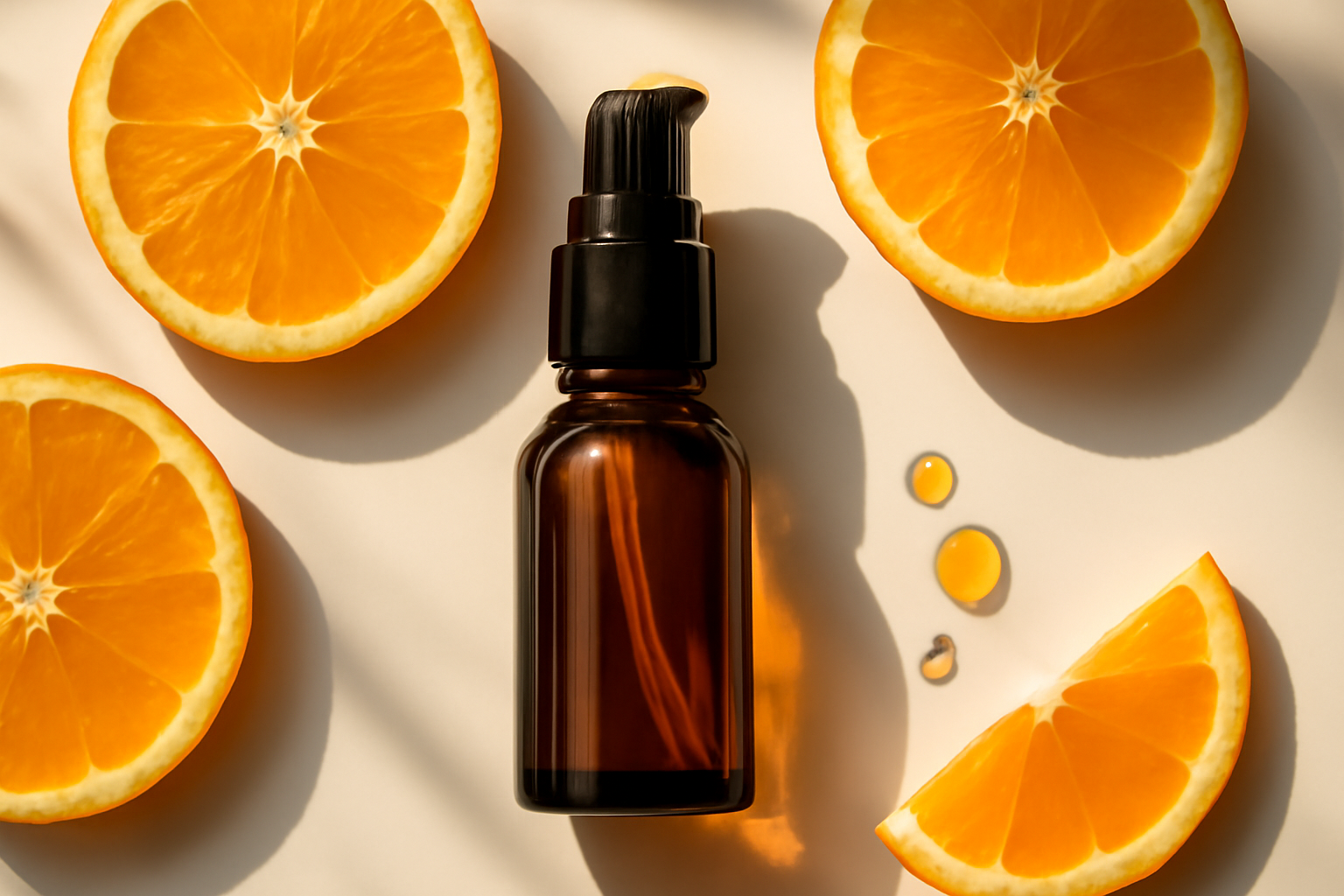
Packaging: This one matters more than people realize. Vitamin C oxidizes when exposed to light and air. Look for dark or opaque glass bottles with an airless pump — not clear bottles with a dropper that lets air in every time you open it. If your serum has turned orange or brown, it’s already oxidized and largely ineffective.
Supporting ingredients: The best vitamin C serums also include vitamin E and ferulic acid. This trio is backed by research from Duke University showing it can increase the photoprotective effectiveness of vitamin C by up to eightfold. Hyaluronic acid is another common and useful addition, helping counteract any dryness.
How to Apply Vitamin C Serum Correctly
This is where most people go wrong — and where I went wrong for months. The application process is simple once you understand the logic behind it.
Step 1 — Cleanse first. Vitamin C serum should always go on freshly cleansed skin. Applying it over sunscreen, makeup residue, or even just the natural oils that build up overnight blocks absorption and reduces effectiveness.
Step 2 — Apply to slightly damp skin. Slightly damp (not soaking wet) skin can actually aid absorption for some formulas. Pat your face gently after cleansing and apply the serum within a minute or two.
Step 3 — Use 3 to 5 drops, no more. A little goes a long way. Warm it between your fingertips and press it gently across your face and neck using light patting motions. Don’t rub aggressively — vitamin C doesn’t need to be worked in hard.
Step 4 — Wait 60 to 90 seconds. Let it absorb before applying anything else. Layering immediately on top can dilute it or interfere with its pH-dependent absorption.
Step 5 — Follow with moisturizer, then SPF. Vitamin C goes before your moisturizer, which seals it in. SPF always comes last in your morning routine. This order is non-negotiable if you want results.
Morning vs. night: Use vitamin C in the morning. Its antioxidant properties are most valuable when your skin faces daily environmental stressors like UV rays and pollution. At night, your skin is in repair mode — that’s when ingredients like retinol or peptides shine. Speaking of which, if you’re curious how to combine vitamin C with retinol safely, our retinol guide for beginners covers exactly that.
Realistic Results: What to Expect and When
Vitamin C is not an overnight fix. I know that’s not what anyone wants to hear, but understanding the timeline is what keeps you from giving up too early — or from feeling deceived.
Weeks 1–2: You may notice a subtle glow or slight improvement in texture. Some people experience mild tingling, especially with higher concentrations. That’s normal. Persistent stinging, redness, or breakouts are not — lower the concentration or switch to a stabilized derivative.
Weeks 4–6: This is when most people start seeing a visible difference in skin brightness and evenness. Dark spots don’t disappear, but they begin to look less distinct.
Weeks 8–12: Hyperpigmentation fades more noticeably. Fine lines may look slightly softer due to improved collagen support. Skin tone overall looks more consistent.
According to Consumer Reports, users who stuck with a quality vitamin C serum for at least 12 weeks reported significantly higher satisfaction than those who evaluated results at four weeks. Consistency is the actual active ingredient here.
Also — don’t stack results against filters. Real vitamin C results are subtle, gradual improvements in how your skin looks in natural light. They’re real, but they won’t turn your skin into an Instagram photo.
Common Mistakes That Kill Your Results
Even with a quality serum, these mistakes can quietly keep you from seeing any benefit:
1. Using an oxidized product. If your serum looks dark orange or brown, it has oxidized and lost most of its potency. This is the most common reason people feel like vitamin C doesn’t work. Buy smaller bottles if you use it slowly, and store it in a cool, dark place — not in a steamy bathroom.
2. Layering with niacinamide directly. There’s ongoing debate about this, but applying high-concentration niacinamide immediately on top of vitamin C can potentially reduce the effectiveness of both. If you use both, apply them at separate times — vitamin C in the morning, niacinamide at night — or choose a serum that has already formulated them together at balanced levels.
3. Skipping SPF. Vitamin C enhances your skin’s defense against UV damage, but it is not a replacement for sunscreen. Skipping SPF while using vitamin C is like wearing a helmet with no seatbelt. You need both, every single day.
4. Applying too much too fast. If you have sensitive or reactive skin and you start with 20% L-ascorbic acid daily, irritation is almost guaranteed. Begin with every other day, or start with a lower concentration serum and work up over several weeks.
5. Inconsistency. Using vitamin C three times a week sporadically won’t give you the same results as daily use. The benefits build cumulatively over time. Make it a locked-in morning step, not an occasional treat.
Frequently Asked Questions About Vitamin C Serum
Can I use vitamin C serum every day?
Yes — and ideally you should. Daily morning use gives you the most consistent antioxidant protection and the best long-term brightening results. If you’re new to it or have sensitive skin, start with every other day and build up.
Can I use vitamin C serum under my eyes?
Yes, carefully. A small amount applied gently to the under-eye area can help with dark circles caused by hyperpigmentation. Avoid getting it directly into your eyes, and if the area feels too sensitive, skip it there.
What happens if I use vitamin C with retinol?
Use them at different times of day — vitamin C in the morning, retinol at night. Using both simultaneously can increase irritation and isn’t necessary. Each works better in its own window anyway.
How long does a vitamin C serum last once opened?
Most formulas are effective for 3 to 6 months after opening when stored correctly. After that, oxidation typically makes them less effective even if they don’t look dramatically different. Check for color change as a key indicator.
Is vitamin C serum safe during pregnancy?
Topical vitamin C is generally considered safe during pregnancy. However, always check with your OB-GYN before adding any new skincare ingredient during pregnancy, especially in high concentrations.
The Bottom Line on Vitamin C Serum
Vitamin C serum is genuinely one of the most effective brightening and protective ingredients in skincare — but only when you use the right formula, apply it correctly, and give it enough time to work. The gap between people who swear by it and people who dismiss it almost always comes down to those three factors.
Start with a well-formulated serum in dark packaging, apply it to clean skin every morning before your moisturizer and SPF, and commit to at least 10 to 12 weeks before making any judgment calls. Small, consistent habits compound — and in skincare, that’s how real results actually happen.
Pick your serum this week, build it into your morning routine, and give your skin the time it needs. You might be surprised what you see in the mirror two months from now.