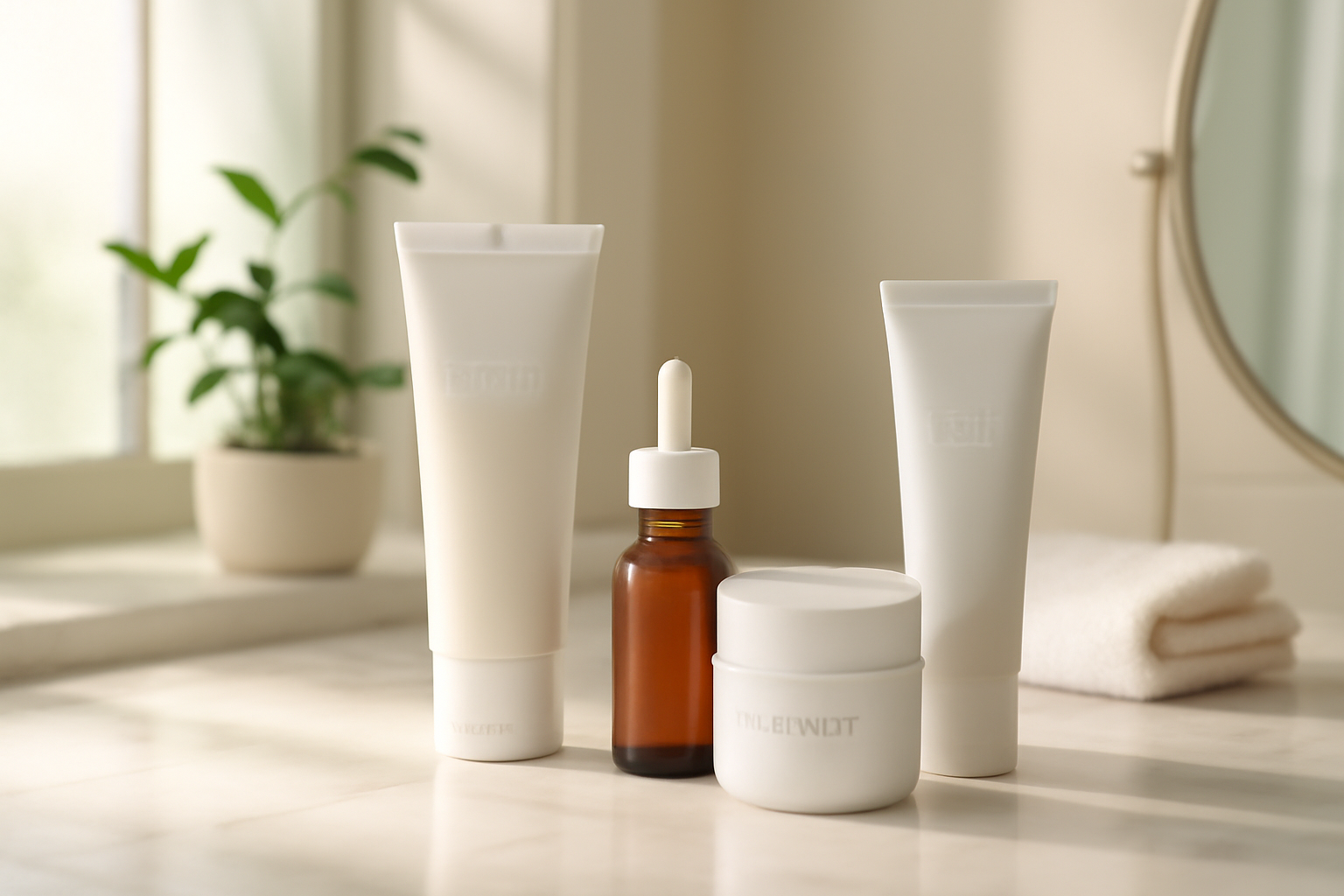
I used to splash water on my face, slap on some SPF, and call it a morning — until a dermatologist told me I was aging myself by five years without realizing it.
If your morning skincare routine is an afterthought squeezed between pouring coffee and answering emails, you’re not alone. According to a 2024 survey by the American Academy of Dermatology, nearly 60% of US adults say they skip at least one essential skincare step every morning due to time constraints. The irony? A streamlined, intentional routine takes less than seven minutes — and the long-term payoff is enormous.
This guide is built for real people with real schedules: the 6 AM commuters, the work-from-home parents, the late risers who have exactly twelve minutes before a Zoom call. You’ll learn which steps are genuinely non-negotiable, what products are worth the investment, and how to build a morning skincare routine that actually sticks — without turning your bathroom sink into a 15-step chemistry lab.
Whether you’re dealing with dry patches, oily T-zones, dark spots, or just a general sense that your skin could look better, the framework here will give you a clear starting point grounded in dermatological science and honest, real-world testing.
Why Your Morning Skincare Routine Matters More Than You Think
Here’s a truth most of us learn a little too late: the skin you have at 45 is largely the result of decisions you made at 30. Morning routines aren’t about vanity — they’re about protection.
Your skin faces a daily assault the moment you step outside. UV radiation, pollution, blue light from screens, and environmental free radicals all break down collagen, trigger inflammation, and accelerate the appearance of fine lines. A study published in the Journal of the American Academy of Dermatology found that daily SPF use alone can reduce visible skin aging by up to 24% over four years — and that’s just sunscreen.
What you put on your face in the morning sets the defensive baseline for the entire day. A nighttime routine is about repair; a morning routine is about armor. Without one, you’re sending unprotected skin into the world and wondering why it looks tired by 3 PM.
For US adults aged 25-55, the stakes are especially high because this is the window where collagen loss begins to accelerate (around age 25), yet where the right habits can still make a dramatic difference. Starting or optimizing your morning skincare routine now isn’t catching up — it’s getting ahead.
Step One: Cleanse with Intention, Not Aggression
My biggest skincare mistake in my 20s was using the same bar of soap on my face that I used on everything else. My skin was perpetually tight, flaky at the forehead, and oily by noon — a classic sign of a disrupted moisture barrier.
Morning cleansing should be gentle. Unlike your evening cleanse — which needs to strip away sunscreen, makeup, and the day’s grime — your morning wash is simply clearing away sweat, overnight sebum, and whatever residue your pillowcase left behind.
Dermatologists at the Mayo Clinic recommend a pH-balanced, sulfate-free cleanser for most skin types in the morning. If you have dry or sensitive skin, you can even rinse with lukewarm water only and skip cleanser entirely — your skin barrier will thank you.
Good options across price points: CeraVe Hydrating Cleanser (around $14, excellent for dry to normal skin), La Roche-Posay Toleriane Purifying Foaming Cleanser (around $20, great for oily or combination skin), and Vanicream Gentle Facial Cleanser (around $10, ideal for sensitive or reactive skin).
The rule of thumb: if your skin feels tight or squeaky-clean after washing, your cleanser is too harsh. Healthy cleansed skin should feel comfortable and balanced — not stripped.
Step Two: Layer Actives Smartly (Vitamin C Is Your Friend)
Once your face is clean, the next move is arguably the most impactful one you can make for long-term skin health: antioxidant protection.
Vitamin C serums have become the workhouse of modern morning skincare — and for good reason. A Stanford University dermatology study confirmed that L-ascorbic acid (the active form of Vitamin C) neutralizes free radicals generated by UV exposure and pollution before they can damage collagen fibers. Applied under sunscreen, it amplifies your SPF’s protective effect and visibly brightens over time.
The catch? Vitamin C is notoriously unstable. It oxidizes quickly when exposed to air and light, turning orange or brown and losing efficacy. Look for formulations with at least 10-15% L-ascorbic acid in opaque or airtight packaging. SkinCeuticals C E Ferulic is the gold standard (and yes, it’s pricey at around $180), but alternatives like TruSkin Vitamin C Serum (around $20) and Naturium Vitamin C Complex Serum (around $22) have earned strong reviews from Wirecutter and Good Housekeeping for delivering real results at accessible prices.
Apply your Vitamin C serum after cleansing, let it absorb for 60 seconds, and then move on. If you’re new to actives, start with three mornings per week and build up — some people experience mild tingling initially.
If Vitamin C doesn’t agree with your skin (it can irritate very sensitive types), niacinamide is an excellent alternative: it reduces redness, tightens pores, and plays beautifully with every other skincare ingredient.
Step Three: Moisturize and — Always — Use SPF
Here’s where a lot of people try to combine steps and end up shortchanging both. Moisturizer and SPF serve different functions, and while there are excellent moisturizer-SPF combos out there, you need to understand what each does before you consolidate.
Moisturizer’s job is to hydrate, support your skin barrier, and lock in the actives you just applied. Even oily skin needs moisturizer — skipping it triggers more oil production as your skin tries to compensate. Lightweight gel moisturizers (like Neutrogena Hydro Boost Water Gel) work well for oily types; richer creams (like Cerave Moisturizing Cream) suit dry skin.
SPF is non-negotiable. Full stop. The Skin Cancer Foundation states that 1 in 5 Americans will develop skin cancer by age 70, and daily broad-spectrum SPF 30 or higher is the single most evidence-backed step for both cancer prevention and anti-aging. Apply it as the final step of your routine, use about a nickel-sized amount for your face, and don’t forget your neck and the backs of your hands.
Top-rated options that work well under makeup or alone: EltaMD UV Clear Broad-Spectrum SPF 46 (a cult favorite for acne-prone and sensitive skin), Supergoop! Unseen Sunscreen SPF 40 (weightless, invisible finish), and La Roche-Posay Anthelios Melt-in Milk SPF 100 for those who want maximum protection without a white cast.
If you’re in a rush and need one product to do it all, a tinted SPF moisturizer like ILIA Super Serum Skin Tint or Kinship Self Reflect SPF 32 gets you coverage, hydration, and protection in a single step.
Common Mistakes That Are Quietly Sabotaging Your Skin
Even people who have a routine in place often undermine it with a few key missteps. Here are the most common ones — and how to fix them.
Using water that’s too hot. Hot water feels good in the morning but strips your skin’s natural oils and damages the moisture barrier. Use lukewarm water every time — it’s one of those small changes that adds up significantly over months.
Skipping SPF on cloudy days or indoors. UV rays penetrate clouds and glass windows. If you’re working near a window or stepping outside even briefly, you need SPF. A 2023 study in JAMA Dermatology found that people who applied sunscreen consistently — including on overcast days — showed measurably less photoaging than those who applied it selectively.
Applying products in the wrong order. The general rule is thinnest to thickest: cleanser → toner (if you use one) → serum → moisturizer → SPF. Applying a thick cream before a serum blocks absorption. This seems minor until you realize you’ve been wasting product for months.
Using too many active ingredients at once. Retinol, AHAs, BHAs, and Vitamin C all have their place — but stacking them all into one morning routine is a recipe for irritation and barrier damage. Morning routines should focus on protection (antioxidants, SPF); save the stronger exfoliating actives for your evening routine.
Touching your face throughout the morning. You’ve just applied a carefully layered routine. Every time you prop your chin on your hand or rub your eyes, you’re disrupting that barrier and introducing bacteria. It’s a hard habit to break, but it matters.
Frequently Asked Questions
How many steps does a morning skincare routine really need?
At minimum, three: cleanser (or a water rinse for dry skin), moisturizer, and SPF. Adding a Vitamin C serum is the most impactful upgrade after those basics. More isn’t always better — consistency beats complexity every time.
Can I use the same moisturizer morning and night?
Yes, in most cases — especially if it’s a simple, hydrating formula without actives. However, your nighttime moisturizer might include ingredients like retinol or AHAs that you don’t want on your face during sun exposure, so check labels before doubling up.
How long should I wait between skincare steps?
30-60 seconds between serum and moisturizer is usually enough. SPF should go on last and be given a minute or two to set before applying makeup. You don’t need to time multiple 10-minute wait periods — that’s a myth that’s complicated a lot of routines unnecessarily.
What’s the best morning skincare routine for oily skin?
Stick with a foaming or gel cleanser, skip heavy creams in favor of lightweight gel moisturizers with hyaluronic acid, and use a non-comedogenic, matte-finish SPF. Niacinamide serum is especially helpful for oily types — it regulates sebum production over time.
Is expensive skincare always better?
Not necessarily. Consumer Reports and Wirecutter have repeatedly found that drugstore brands like CeraVe, Neutrogena, and La Roche-Posay outperform or match luxury alternatives in clinical testing. The most expensive step worth splurging on, if any, is a high-stability Vitamin C serum — formulation quality matters most there.
Your Next Step Starts Tomorrow Morning
Building a morning skincare routine doesn’t require a cabinet full of products or a skincare degree. It requires three to five consistent steps, a little knowledge about what each one does, and the willingness to do it every day — even on the mornings when your alarm goes off too early and everything feels like too much.
Start simple: a gentle cleanser, a moisturizer suited to your skin type, and a broad-spectrum SPF 30 or higher. Once those three steps feel automatic, add a Vitamin C serum. Then reassess in 60 days.
The best morning skincare routine is the one you’ll actually do. Pick your products, lay them out the night before, and give your skin the seven minutes it’s been asking for. You’ll notice the difference before anyone else does — and that’s the whole point.