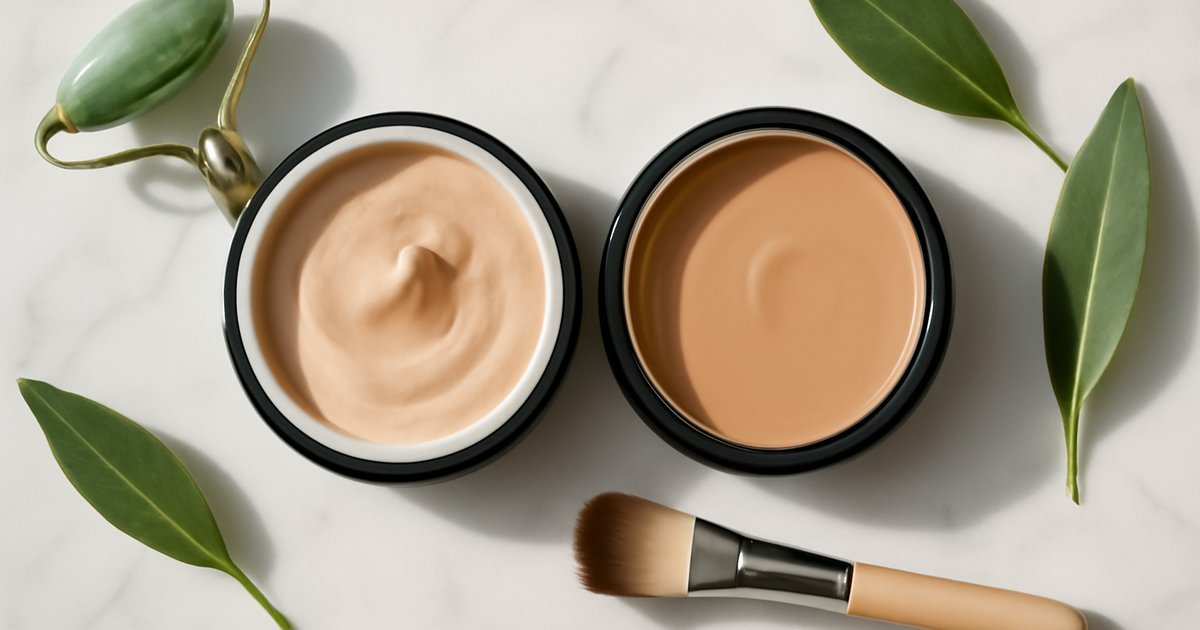
I used to spend 20 minutes blending foundation every morning — until a dermatologist friend asked me why I was working so hard against my own skin.
That question stopped me cold. I had combination skin that was constantly fighting back — breaking out, looking cakey by noon, feeling suffocated by 3 p.m. And yet every morning I faithfully applied full-coverage foundation because I thought that’s what you were supposed to do.
The truth? For most people, full-coverage foundation isn’t the daily essential the beauty industry sold us for decades. And the rise of tinted moisturizer as a serious skincare-makeup hybrid has changed the game for millions of adults who want to look polished without feeling like they’re wearing a mask.
But the debate between tinted moisturizer vs foundation isn’t one-size-fits-all. The right answer depends on your skin type, lifestyle, coverage needs, and even the time of year. In this guide, you’ll get a clear, honest breakdown of both options — what they do well, where they fall short, and exactly how to decide which one deserves a spot in your daily routine.
Why This Choice Actually Matters for Your Skin Health
This isn’t just a cosmetic preference — it’s a skincare decision with real consequences.
A 2023 survey by the American Academy of Dermatology found that over 60% of adults with acne-prone or sensitive skin reported that their complexion worsened after switching to heavier makeup formulas. The culprit is often pore-clogging ingredients, occlusive pigments, and inadequate hydration in traditional foundations.
Meanwhile, the global tinted moisturizer market has been growing steadily, driven largely by the "skinimalism" movement — the cultural shift away from heavy coverage toward skin-first, product-smart routines. For adults between 25 and 55, this matters because your skin’s needs genuinely change over time: collagen production drops, hydration becomes harder to maintain, and heavy formulas can settle into fine lines in unflattering ways.
Choosing the wrong base product isn’t just a bad makeup day. Over time, it can contribute to dehydration, inflammation, or a cycle of covering up problems your skin is actively trying to heal.
What Tinted Moisturizers Actually Do (and Do Really Well)
Tinted moisturizers started as a summer shortcut and evolved into a sophisticated product category. Today’s best formulas — think Laura Mercier, IT Cosmetics, or ILIA’s Super Serum Skin Tint — deliver real skincare benefits alongside light-to-medium coverage.
Here’s what they genuinely do well:
Hydration first. Tinted moisturizers are formulated to deliver moisture as their primary function. Many contain hyaluronic acid, glycerin, or ceramides — ingredients that actually support your skin barrier while you wear them. If you’ve been dealing with dry patches or dull skin, a tinted moisturizer can double as a treatment and a complexion product in one step.
Natural-looking finish. The coverage is sheer to light-medium, which means your skin texture — including some freckles, natural variation, and even slight imperfections — shows through. For adults who want to look put-together without looking made-up, this is the sweet spot. Wirecutter has consistently recommended tinted moisturizers with SPF for their practical daily value, particularly for people who struggle to keep a sunscreen step in their morning routine.
Faster application and fewer ingredients on your skin. With one product doing three jobs (moisturizer, coverage, often SPF), your morning takes less time and your skin is exposed to fewer potentially irritating formulas. That’s meaningful if you have reactive or sensitized skin.
The honest trade-off: tinted moisturizers won’t cover significant hyperpigmentation, active breakouts, or redness without additional concealer. If you have skin concerns you want to neutralize fully, a tinted moisturizer alone may leave you feeling underdressed.
Where Foundation Still Wins — And Who Really Needs It
Foundation isn’t going anywhere, and for good reason. The right formula, applied correctly, can completely transform how your skin looks on camera, in professional settings, or on special occasions when you want lasting, polished coverage.
A study published in the Journal of Cosmetic Dermatology found that individuals with moderate-to-severe hyperpigmentation or rosacea reported significantly higher confidence and satisfaction when using medium-to-full coverage formulas compared to lighter alternatives. Coverage isn’t vanity — for many people, it’s a practical tool for managing how skin conditions affect their daily life.
Foundation genuinely excels in these situations:
Skin-evening for photography or events. Cameras and lighting expose uneven skin tone that the naked eye forgives. If you have a wedding, presentation, or reunion coming up, a buildable or full-coverage foundation gives you consistency that photographs beautifully.
Managing visible skin conditions. If you have rosacea, post-inflammatory hyperpigmentation, or melasma, sheer coverage simply won’t do what you need. A dermatologist-approved mineral foundation or color-correcting formula can be part of your management strategy — not a mask, but a tool.
Longevity in demanding conditions. A long-wear foundation with setting powder will outlast a tinted moisturizer in heat, humidity, or a 10-hour workday. If you’re on your feet all day, traveling, or attending an outdoor summer event, that staying power matters.
The honest trade-off: foundation requires more skill to apply well, takes more time, and can feel heavier — especially in warm weather or on oily skin types where it tends to break down or migrate by midday.
How to Match Your Choice to Your Skin Type and Lifestyle
This is where the decision gets personal. There’s no universal answer, but there are some clear patterns that help narrow it down.
If you have dry or mature skin: Tinted moisturizer is almost always the better daily choice. Foundations — especially powder or matte formulas — settle into fine lines and dry patches in ways that make skin look older, not younger. A dewy tinted moisturizer keeps skin looking plump and luminous without highlighting texture.
If you have oily or combination skin: This one depends on your coverage goals. A lightweight, oil-free tinted moisturizer with SPF can work well on low-key days, but you may find a semi-matte foundation holds better through the afternoon. Don’t be afraid to mix — a light layer of tinted moisturizer followed by targeted concealer is a popular hybrid approach that gives you both breathability and coverage where you need it.
If you have acne-prone or sensitized skin: Look for non-comedogenic formulas in either category. Many dermatologists recommend starting with a tinted moisturizer to reduce product load on your skin — fewer heavy formulas means fewer chances for irritation or clogged pores. Our guide on building an acne-prone skin care routine covers how to layer makeup products without undoing your skincare work.
If you’re over 40: Skin continues to lose elasticity and natural luminosity with age. Tinted moisturizers with light-reflecting particles can give you that radiant look without the effort. If coverage is needed, look for hydrating, skin-tint-style foundations rather than traditional matte options.
Lifestyle test: Ask yourself honestly — on a typical Tuesday, are you going to an office meeting, a school pickup, or a Zoom call from home? Your daily context should drive your daily base. Save the full-coverage routine for when it genuinely serves you.
Common Mistakes People Make When Choosing Between the Two
After years of testing both and talking to skincare professionals, here are the pitfalls that come up most often:
Mistake #1: Choosing based on coverage anxiety, not actual needs. Many people default to full-coverage foundation because they feel insecure about visible skin, not because their skin actually requires that level of coverage. Start lighter and add targeted concealer where you truly need it. You may find the result looks better — and more natural — than a full face of foundation ever did.
Mistake #2: Picking a tinted moisturizer with no SPF. If you’re switching to a tinted moisturizer partly to simplify your routine, look for formulas with at least SPF 30. Mayo Clinic recommends daily broad-spectrum protection as a non-negotiable skin health habit. Skipping it to save a step defeats the purpose. Explore our skin barrier repair guide to understand why daily UV protection is foundational to healthy skin over time.
Mistake #3: Applying either product to skin that isn’t properly prepped. Foundation or tinted moisturizer applied over dry, unexfoliated skin will never look its best. Gentle exfoliation and proper moisturization underneath are what allow these products to sit smoothly. Check out our breakdown of how often to exfoliate for your skin type if this is a step you’ve been skipping.
Mistake #4: Expecting one product to do everything. Even the best tinted moisturizer won’t give you full coverage, and even the most breathable foundation won’t feel as light as nothing. Accepting each product’s strengths — and supplementing with spot concealer when needed — is how real-world makeup routines actually work.
Mistake #5: Not shade-testing properly. Both product types need to be matched to your neck, not just your face. A common error is choosing a shade that looks right on the back of your hand in-store but creates a visible line of demarcation at your jawline. Always test on your jaw in natural light.
Frequently Asked Questions
Can I mix tinted moisturizer and foundation together?
Yes — mixing a pump of your foundation with a pump of tinted moisturizer is a popular way to create a custom-coverage formula that feels lighter and more hydrating than straight foundation. This works especially well in dry or cold-weather months.
Is tinted moisturizer good enough for professional settings?
For most office environments and everyday professional settings, absolutely. If your concern is looking polished and put-together, a quality tinted moisturizer with concealer for any specific spots is more than sufficient. If you’re appearing on camera frequently or in high-definition settings, a light-to-medium foundation might serve you better.
Does tinted moisturizer replace sunscreen?
Only if it contains SPF 30 or higher and you apply a generous, even amount. Most people apply makeup too lightly to get full SPF protection from it alone. Applying a separate broad-spectrum SPF underneath is still the gold standard recommendation from dermatologists.
Which is better for aging skin — tinted moisturizer or foundation?
For daily wear, most dermatologists and makeup artists recommend tinted moisturizer for skin over 40. The hydrating formula and lighter coverage are less likely to settle into fine lines or emphasize skin texture. On days when more coverage is needed, a skin-tint style hydrating foundation works better than a matte or powder formula.
Can I wear tinted moisturizer without other makeup?
Absolutely — and this is one of its biggest advantages. A tinted moisturizer alone gives your complexion an effortless, natural look that works for casual days, errands, and low-key socializing without looking like you "have makeup on."
The Bottom Line: Make the Choice That Works for Your Real Life
There’s no wrong answer in the tinted moisturizer vs foundation debate — only the answer that fits your skin, your schedule, and your actual goals. If you’ve been defaulting to heavy coverage out of habit, it might be worth giving a quality tinted moisturizer a genuine two-week trial. Many people find they not only look better, but their skin behaves better too.
And if you’re loyal to foundation for good reason — you need that coverage, you love that finish, it genuinely works for your skin — don’t let anyone convince you otherwise. The goal of any base product is to make you feel confident and comfortable in your own skin.
Start with where you are. Be honest about what your skin actually needs on a Tuesday morning. And give yourself permission to choose differently depending on the day, the occasion, and the season. Your routine doesn’t have to be all-or-nothing — and your skin will thank you for the flexibility.