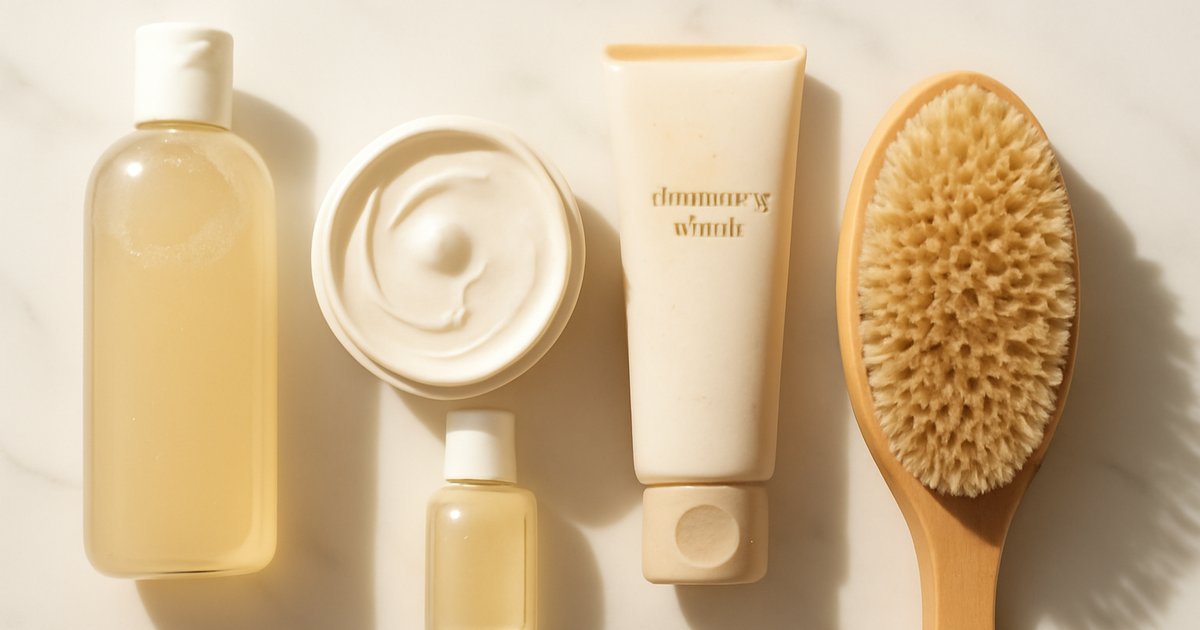
I used to spend twenty minutes on my face every morning — and approximately forty-five seconds on the rest of my body. Sound familiar?
It wasn’t until a dermatologist pointed out the dry, rough patches on my arms during a routine checkup that I realized I had been completely neglecting 90 percent of my skin. My face was hydrated, protected, and glowing. My elbows looked like sandpaper.
Here’s the truth most skincare content won’t tell you: your body deserves the same intentional care as your face. A solid body skincare routine isn’t about buying a dozen new products or spending an extra hour in the bathroom. It’s about being strategic with the right steps, in the right order, with ingredients that actually work below the neck.
In this guide, you’ll learn exactly how to build a complete body skincare routine — from shower habits to targeted treatments — that fits into your real life. Whether you’re dealing with dry skin, keratosis pilaris, uneven tone, or just want that all-over glow, this is the practical breakdown you’ve been looking for.
Why Your Body Skin Is Being Ignored — And Why That’s a Problem
We live in a face-first skincare culture. Scroll through any beauty feed and you’ll see serums, SPF, retinol routines — all for the face. Body care barely gets a mention unless it’s a basic lotion ad.
But body skin has real needs. According to the American Academy of Dermatology, chronic dry skin affects roughly 50 percent of adults in the United States, and it’s one of the most common reasons people visit a dermatologist. Beyond aesthetics, neglected body skin can lead to conditions like eczema flare-ups, ingrown hairs, hyperpigmentation, and accelerated visible aging on the chest, hands, and neck.
The skin on your body is actually thicker than facial skin in many areas, but it has fewer sebaceous glands — meaning it produces less natural oil and dries out faster, especially in climates with cold winters or heavy air conditioning use.
The good news? Body skin responds quickly to care. Most people notice a real difference in texture and hydration within two to three weeks of a consistent routine. You don’t need a complicated system. You just need the right one.
Step One: Get Your Shower Habits Right First
Before you think about what goes on your skin after the shower, let’s talk about what you’re doing inside it — because your shower routine might be actively working against you.
A 2023 study published in the Journal of Investigative Dermatology found that showering with water temperatures above 105°F significantly disrupts the skin’s lipid barrier, leading to increased transepidermal water loss and dryness that compounds over time. In plain terms: hot showers feel amazing but wreck your skin barrier.
Here’s what to adjust:
Lower your water temperature. Lukewarm water — not scalding — is the gold standard. If you can’t give up the heat entirely, finish with a 30-second cool rinse. Your skin (and hair) will thank you.
Choose a gentle, fragrance-free body wash. Heavily fragranced soaps and antibacterial body washes strip natural oils. Look for formulas with ceramides, glycerin, or colloidal oatmeal — especially if you have sensitive or dry skin. Brands like CeraVe, Dove Sensitive, and Vanicream have solid options in the $8–$15 range that dermatologists consistently recommend.
Time your showers wisely. Limit them to 10 minutes max if dryness is a concern. And pat — don’t rub — your skin dry with a soft towel, leaving a little moisture behind before applying products.
One thing I wish someone had told me earlier: the shower itself sets the stage for everything that comes after. Skip this step and even the best body lotion won’t do its job properly.
Step Two: Exfoliate Strategically (Not Obsessively)
Exfoliation is where a lot of people either do too little or go completely overboard. Both extremes lead to the same result: irritated, lackluster skin.
The Mayo Clinic notes that regular exfoliation helps remove dead skin cell buildup, improves product absorption, and can significantly reduce the appearance of conditions like keratosis pilaris — those small, rough bumps that commonly appear on the upper arms and thighs and affect an estimated 40 percent of adults.
There are two main approaches:
Physical exfoliation uses a scrub, dry brush, or exfoliating cloth. It’s satisfying and gives immediate smoothness, but it’s easy to overdo. Once or twice a week on the body is enough. A dry-brushing session before your shower — using long, upward strokes toward the heart — doubles as a circulation booster and counts as your exfoliation for the week.
Chemical exfoliation with AHAs (like glycolic or lactic acid) or BHAs (like salicylic acid) works deeper and is often more effective for rough texture, ingrown hairs, and uneven tone. Body lotions with lactic acid — AmLactin is a drugstore favorite that costs around $15 — are excellent for bumpy arms and dry legs. Use these two to three times per week, not daily.
The honest trade-off: physical scrubs feel more immediately gratifying, but chemical exfoliants tend to deliver better long-term results for texture and tone. If you’re dealing with keratosis pilaris or hyperpigmentation on the body, lactic acid-based products are worth trying first.
For a deeper look at how exfoliation connects to your overall skin health, check out How to Repair Your Skin Barrier and Keep It Strong — it covers the balance between sloughing off dead skin and protecting what’s underneath.
Step Three: Moisturize Like You Mean It
This is the step that makes the biggest visible difference, fastest. And yet most people do it wrong — or skip it entirely because they “don’t have time.”
The key principle here is the “three-minute rule” championed by Harvard-affiliated dermatologist Dr. Peter Lio: apply moisturizer within three minutes of stepping out of the shower, while your skin is still slightly damp. This traps water in the skin rather than letting it evaporate, giving you dramatically better hydration than applying to completely dry skin.
For body moisturizers, here’s how to choose by skin type:
Dry or very dry skin: Reach for thick creams or ointments with ceramides, shea butter, or urea. CeraVe Moisturizing Cream, Eucerin Original Healing, and Vaseline Intensive Care Advanced Repair are dermatologist-recommended options that won’t break the bank. Urea-based creams (at 10–25%) are particularly effective for extremely rough areas like heels and elbows.
Normal to slightly dry skin: A lightweight body lotion with glycerin, aloe, or hyaluronic acid works well. Gold Bond, Lubriderm, and Neutrogena Hydro Boost Body are solid picks.
Oily or acne-prone skin: Yes, some people get body breakouts — especially on the back and chest. Look for non-comedogenic body lotions or gel formulas. Avoid heavy oils like coconut oil on acne-prone areas.
Don’t forget your neck, chest, and the backs of your hands. These areas show aging fastest and are almost always undertreated. If you want to take it a step further, your face serum’s leftovers — hyaluronic acid, niacinamide — can go right onto your neck and chest before your body lotion. No extra product needed.
If you’re building a more intentional self-care practice around your skincare, Mindful Skincare: Transform Your Routine into a Daily Ritual is a great companion read.
Step Four: Targeted Treatments for Common Body Skin Concerns
Once you’ve got the shower, exfoliation, and moisturizing steps locked in, you can layer in targeted treatments for specific concerns. Think of this as the “booster” layer of your body routine — not mandatory for everyone, but worth knowing about.
Hyperpigmentation and uneven tone: Look for body lotions or serums with niacinamide, vitamin C, or tranexamic acid. These ingredients work on the body just as they do on the face, though results take longer — expect eight to twelve weeks of consistent use. Naturium and The Ordinary both offer body-specific brightening products at accessible price points.
Stretch marks and scars: While no topical product can fully erase stretch marks, keeping skin well-moisturized reduces their appearance over time. Products with centella asiatica, rosehip oil, and peptides support skin elasticity. Be realistic: improvement is possible; perfection is not.
Body acne (bacne and chest acne): Benzoyl peroxide body washes (like PanOxyl) used a few times a week are the gold standard for clearing body breakouts. Salicylic acid sprays are easier to apply to your own back than a rinse-off wash. Zinc-based body powders can help reduce friction and moisture in acne-prone areas.
Dry, cracked heels: A dedicated foot cream with urea (15–25%) used nightly and covered with cotton socks is the most effective approach. This isn’t glamorous, but it works within a week or two. Flexitol and O’Keeffe’s Healthy Feet are consistently top-rated by Consumer Reports for this purpose.
The honest truth about body treatments: they require patience. Most people quit before the product has had time to work. Stick with a targeted product for at least six to eight weeks before switching.
Body Skincare Mistakes That Are Sabotaging Your Results
Even with good intentions, there are a few common habits that can undo all your effort. Here are the ones I see — and have personally made — most often:
Skipping SPF on exposed body skin. If your arms, chest, or décolletage are regularly exposed to the sun — and in the US, they are, for much of the year — skipping SPF is one of the fastest ways to age your skin. A broad-spectrum SPF 30+ body sunscreen applied every morning is non-negotiable for anyone who cares about long-term skin health. The American Cancer Society estimates that one in five Americans will develop skin cancer in their lifetime, and UV exposure is the primary driver.
Using the same towel for weeks without washing it. Your towel picks up dead skin, bacteria, and product residue every time you use it. Dermatologists generally recommend washing body towels every three to four uses to prevent bacterial buildup that can contribute to body breakouts.
Applying body lotion over completely dry skin. As covered earlier, damp skin absorbs moisturizer far more effectively. Applying lotion to completely dried-out skin means you’re mostly just coating the surface rather than locking in hydration.
Over-exfoliating and calling it care. More scrubbing is not better. Exfoliating too frequently — especially with harsh physical scrubs — damages the skin barrier and causes inflammation. Two to three times per week is the ceiling for most people.
Ignoring your hands. Your hands are constantly exposed to water, soap, sanitizer, and UV light. They age faster than almost any other part of the body. A hand cream with SPF applied during the day and a rich, urea-based cream at night makes a significant difference over time.
And if you’re curious about supporting your skin from the inside out as well, Holistic Skincare: Nurture Your Glow from Within covers how nutrition and lifestyle choices show up on your skin all over your body.
Frequently Asked Questions About Body Skincare Routines
How often should I moisturize my body?
Daily is ideal, ideally right after your shower when skin is still slightly damp. If once-daily feels like too much, prioritize your driest areas — shins, elbows, hands — and build from there.
Can I use face skincare products on my body?
Yes, in many cases. Serums with hyaluronic acid, niacinamide, or vitamin C can absolutely be applied to your neck, chest, and hands. Body skin is generally more resilient than facial skin, so it tolerates a wider range of products. Just be mindful of cost — face products applied body-wide can get expensive fast.
Is body oil better than body lotion?
It depends on your skin type and preference. Oils are excellent for very dry skin and add a luxurious feel, but they don’t attract water to the skin the way humectants in lotions do. The best approach for dry skin is often to apply a lotion while damp, then seal with a few drops of a dry oil like squalane or jojoba.
How do I get rid of rough, bumpy skin on my arms?
Those bumps are almost certainly keratosis pilaris — a harmless but stubborn condition. The most effective approach is a combination of consistent chemical exfoliation (lactic acid or salicylic acid body lotion) and daily moisturizing. Results take four to eight weeks. AmLactin and CeraVe SA Lotion are the most recommended drugstore options for this.
What order do body skincare products go in?
Think of it like layering thinnest to thickest, similar to your face routine: start with your body wash in the shower, then exfoliate (in or out of the shower), apply any targeted serums or treatments to damp skin, follow with your main moisturizer, and finish with SPF on any exposed areas in the morning.
Your Body Deserves the Same Attention as Your Face
Building a body skincare routine doesn’t have to be complicated or expensive. The foundation is simple: a gentle shower, strategic exfoliation two to three times a week, a good moisturizer applied to damp skin, and SPF on exposed areas. From there, you can layer in targeted treatments for specific concerns as needed.
Start with the basics for two to three weeks and pay attention to how your skin responds. Most people see real improvement in texture and hydration quickly — which makes it a lot easier to stay consistent.
Pick one step you’re currently skipping and start there. For most people, that’s the moisturizer. Tomorrow morning, try applying it within three minutes of your shower and see how your skin feels by the end of the day. Small shifts, applied consistently, are what actually move the needle.