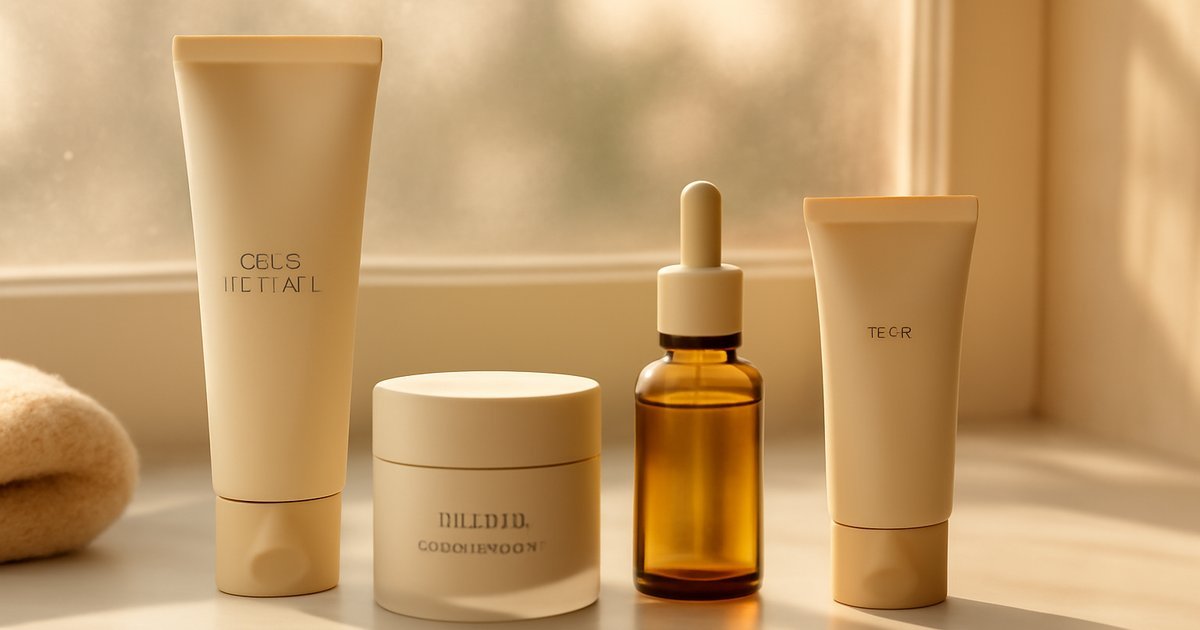
The moment I stopped guessing and started building a real routine was the moment my dry, flaky skin finally turned a corner.
Why Dry Skin Is More Than Just a Comfort Issue
If you’ve ever peeled off a sheet mask hoping it would rescue your parched face — only to be back to square one by the next morning — you already know the frustration. Dry skin isn’t just an aesthetic problem. It’s a signal that your skin barrier is struggling, and when left unaddressed, it can lead to irritation, premature aging, and chronic sensitivity.
According to the American Academy of Dermatology, dry skin (clinically called xerosis) affects more than 50% of adults in the United States, and the numbers spike significantly during winter months and in low-humidity climates. But here’s what most articles don’t tell you: even people in warm, sunny states deal with chronic dryness year-round — thanks to air conditioning, hard water, and over-cleansing.
In this guide, you’ll learn exactly how to build a dry skin care routine that actually works across every season. Not generic tips you’ve seen a hundred times — real product strategies, honest trade-offs, and the specific ingredient combinations that dermatologists and skincare veterans swear by.
Understanding What’s Really Happening With Dry Skin
Before you can fix dry skin, you need to understand what’s breaking it in the first place. Dry skin isn’t just lacking water — it’s lacking the ability to hold onto water. That’s a crucial distinction.
Your skin barrier is made up of lipids (fats), ceramides, and proteins that act like mortar between skin cells. When that barrier is compromised, moisture evaporates faster than your skin can replenish it — a process called transepidermal water loss (TEWL). A 2023 study published in the Journal of Investigative Dermatology found that people with chronic dry skin have measurably lower ceramide levels in their outer skin layer, making barrier repair — not just hydration — the core priority of any effective routine.
This is why slapping on a basic drugstore lotion often isn’t enough. You need to address both moisture delivery and moisture retention — two different steps that require two different types of ingredients.
Common culprits that silently destroy your skin barrier include:
- Foaming cleansers with sulfates (especially sodium lauryl sulfate)
- Over-exfoliating — even with gentle acids
- Hot showers and hard tap water
- Central heating and air conditioning
- Skipping SPF (UV exposure degrades barrier lipids)
Step-by-Step Dry Skin Morning Routine
The morning routine for dry skin has one non-negotiable goal: protect what you’re about to go out and face. Wind, pollution, UV rays, and temperature changes all chip away at your barrier throughout the day.
Here’s a routine that’s practical and layerable without leaving you greasy at 8 a.m.:
Step 1 — Gentle, cream-based cleanser. Skip foaming formulas entirely. For dry skin, a milky or cream cleanser is your best friend. The CeraVe Hydrating Cleanser and La Roche-Posay Toleriane Hydrating Gentle Cleanser consistently rank at the top in Consumer Reports testing for maintaining skin pH without stripping oils. If your skin feels tight after washing, that’s a sign your cleanser is doing more harm than good.
Step 2 — Hydrating toner or essence. This is optional but genuinely useful if your skin drinks moisture fast. Look for formulas with hyaluronic acid, glycerin, or beta-glucan. Apply to slightly damp skin — that detail matters, because humectants like hyaluronic acid need water molecules to pull from.
Step 3 — Serum with active hydrators. A hyaluronic acid serum paired with a niacinamide formula is a strong pairing for dry skin — one delivers hydration, the other supports barrier strength and reduces redness. If you have the budget for one serum, choose niacinamide. It multitasks better than almost any other ingredient at this price point.
Step 4 — Rich moisturizer with ceramides. This is the non-negotiable step. Ceramide-based moisturizers don’t just sit on top of skin — they actually integrate into the skin’s natural lipid structure. CeraVe Moisturizing Cream, First Aid Beauty Ultra Repair Cream, and Vanicream Moisturizing Skin Cream are among the most-tested, dermatologist-recommended options for chronically dry skin.
Step 5 — SPF 30 or higher. A broad-spectrum SPF is non-negotiable, not just for cancer prevention, but for barrier preservation. Mineral sunscreens (zinc oxide, titanium dioxide) tend to feel heavier but are gentler. Check out our guide on SPF sunscreen for daily use if you’re not sure how to pick one that won’t pill under makeup.
Step-by-Step Dry Skin Nighttime Routine
Nighttime is when your skin does its real repair work. Between 11 p.m. and 4 a.m., skin cell turnover peaks — which means what you apply before bed has an outsized impact on your overall skin health. This is the routine where you can be more aggressive with actives, and more generous with rich products.
A Harvard Medical School review on circadian rhythms and skin repair confirmed that skin is significantly more permeable at night, meaning ingredient absorption is measurably higher during sleep hours.
Step 1 — Oil or balm cleanser first. If you wear makeup or sunscreen, the double cleanse method is the most effective approach for removing products without disrupting your barrier. Start with a cleansing oil or balm (DHC Deep Cleansing Oil is a longtime standard), then follow with your gentle cream cleanser. If you don’t wear makeup, your cream cleanser alone is sufficient.
Step 2 — Treatment serum (2-3 nights per week). For dry skin specifically, retinol is one of the best long-term investments — but you need to introduce it very slowly. Dry skin types are more prone to retinol sensitivity, so start with a 0.025% formula once per week and work up gradually. If retinol feels too aggressive, bakuchiol is a plant-based alternative with growing evidence of efficacy and significantly less irritation risk.
Step 3 — Heavier overnight moisturizer or sleeping mask. This is not the time for a lightweight gel. For dry skin, a rich emollient moisturizer with shea butter, squalane, or occlusive ingredients like petrolatum is ideal. Laneige Water Sleeping Mask and Tatcha Water Cream are popular options, though drugstore picks like Aquaphor or plain Vaseline on top of your moisturizer (the "slugging" method) can be equally effective and considerably cheaper.
Step 4 — Facial oil (optional but powerful). Oils don’t hydrate — they seal. Applied after your moisturizer, a few drops of squalane oil, rosehip oil, or marula oil act as an occlusive layer that prevents overnight moisture loss. If you’re sleeping in a dry climate or during winter, this step can make a meaningful difference.
Common Mistakes That Make Dry Skin Worse
You can do everything else right and still sabotage your own results if you’re falling into these common traps.
1. Using too many actives at once. Dry skin has a compromised barrier, which means it’s more sensitive to exfoliants and retinoids than other skin types. Many people add glycolic acid, retinol, and vitamin C all in the same week and wonder why their skin is red and flaking more than ever. Stick to one active at a time, and space them out across your weekly schedule.
2. Applying moisturizer to completely dry skin. Humectants (the water-attracting ingredients in most moisturizers) work by pulling moisture toward the skin. If your skin is bone dry when you apply, there’s nothing to pull from. Apply your serum and moisturizer within 60 seconds of washing your face — that slight dampness matters more than most people realize.
3. Thinking "natural" means gentle. Essential oils, lemon juice, and DIY vinegar toners are common in wellness content, but many are highly irritating for dry, sensitive skin. The APA and most dermatologists caution against applying undiluted citrus oils or acids directly to skin, particularly if your barrier is already compromised.
4. Neglecting your neck and décolleté. The skin on your neck and chest thins and dries faster than your face — partly because most people don’t moisturize there. If you’re fighting signs of aging and dryness and you stop at the jawline, you’re only solving half the problem.
5. Changing your routine too often. Dry skin responds slowly. A new product or ingredient typically needs 6-8 weeks to show real results. If you’re swapping products every two weeks chasing faster results, you’re creating instability and making it harder to know what’s actually working.
Frequently Asked Questions About Dry Skin Care
How do I know if I have dry skin vs. dehydrated skin?
Dry skin is a skin type — it’s genetic and refers to a chronic lack of oil production. Dehydrated skin is a condition — it’s temporary and refers to a lack of water, and it can happen to any skin type including oily skin. If your skin is consistently flaky, tight, and dull regardless of the season or what you drink, you likely have dry skin. If it’s situational and fluctuates, dehydration may be the issue.
Can I use acids (AHAs/BHAs) if I have dry skin?
Yes, but carefully and infrequently. Glycolic acid at a low concentration (5-7%) once per week can help with the buildup of dry, flaky skin cells. Avoid over-exfoliating — more than 1-2 times per week is typically counterproductive for dry skin types. Always follow with a rich moisturizer.
Is drinking more water the solution for dry skin?
It helps, but it’s not the fix most people hope for. Hydration from the inside supports overall skin health, but if your barrier is broken, water will escape regardless of how much you drink. You need topical barrier repair alongside proper hydration habits.
What’s the best moisturizer ingredient for dry skin?
The best moisturizers for dry skin combine three types of ingredients: humectants (hyaluronic acid, glycerin), emollients (shea butter, squalane, oils), and occlusives (petrolatum, beeswax, dimethicone). Products that contain all three — or a combination — consistently outperform single-ingredient moisturizers in clinical testing.
Should I use a facial mist throughout the day?
Facial mists can feel refreshing, but some can actually dry out skin if they evaporate without a moisturizer applied on top. If you use a mist during the day, follow it with a light layer of moisturizer or a balm to lock in that added moisture.
Building a Routine That Lasts
Building a dry skin care routine that actually works isn’t about buying more products — it’s about buying the right ones and using them consistently in the right order. Start with a gentle cleanser, a ceramide moisturizer, and SPF. Add actives one at a time. Adjust seasonally. And give your routine enough time to actually show results before switching things up.
Your skin isn’t a problem to be solved overnight. It’s a long-term relationship, and the more patient and strategic you are, the more it will reward you. Start with the basics, commit to at least six weeks, and build from there. You’ll likely be surprised how much changes when you stop chasing trends and start respecting your barrier.