When the Cold Air Stripped My Skin Bare
The first hard freeze of the season always finds my skin completely unprepared — and I know I’m not alone.
Last January, I stepped off a Chicago subway platform into bitter, single-digit wind and immediately felt my cheeks tighten like shrink wrap. By the time I got home, the skin around my nose was flaking, my lips were cracked, and the fine lines around my eyes looked like they’d deepened overnight. My summer routine — the one that had been working beautifully — had completely failed me.
That frustrating winter was the turning point that sent me deep into research mode, consulting dermatology sources, testing new products, and rebuilding my entire approach to cold-weather skin. What I found changed everything.
A winter skincare routine isn’t just your summer routine with a richer moisturizer swapped in. It’s a genuine seasonal rethink that addresses what cold temperatures, low humidity, and indoor heating actually do to your skin barrier, hydration levels, and oil production. In this guide, I’ll walk you through exactly how to build a routine that keeps your skin resilient, plump, and healthy from the first frost all the way to spring.
Why Winter Wrecks Your Skin (And Why It’s Not Your Fault)
Most people blame their winter skin problems on laziness or the wrong products. The real culprit is environmental physics — and understanding it makes building the right routine much easier.
Cold air holds dramatically less moisture than warm air. When you step outside, that dry air pulls water right out of the top layers of your skin through a process called transepidermal water loss (TEWL). According to research published by the American Academy of Dermatology, TEWL increases significantly in low-humidity environments, which describes virtually every American home running a forced-air heating system in January.
Indoor heat makes things worse. Furnaces and radiators strip even more moisture from the air, creating an indoor humidity level that’s often lower than the Sahara Desert. The result: your skin barrier — that protective lipid layer that keeps moisture in and irritants out — starts to crack and underperform.
That cracked barrier is why winter skin feels tight, looks dull, reacts to products it normally loves, and suddenly starts showing redness or sensitivity. It’s not a new skin problem. It’s a compromised protective layer that needs targeted repair and protection. Once you frame it that way, the solution becomes clear.
Rethinking Your Cleanser for the Cold Months
The single biggest mistake people make in winter is continuing to use a foaming or gel cleanser they loved in summer. Those cleansers are formulated to remove excess oil — which is exactly what you need less of in winter, when your skin is already oil-depleted.
A 2023 study from the Journal of Cosmetic Dermatology confirmed that surfactant-heavy cleansers significantly elevate TEWL even in normal skin conditions. In winter, that effect compounds the damage already being done by the environment.
Switch to a cream, milk, or oil-based cleanser that cleans your skin without stripping it. Look for formulations that include glycerin or fatty acids — they clean while depositing moisture back into the skin. CeraVe Hydrating Cleanser, La Roche-Posay Toleriane Hydrating Gentle Cleanser, and Vanicream Gentle Facial Cleanser are consistently recommended by dermatologists and perform well across skin types in cold weather.
If you wear sunscreen and makeup, you might also consider double cleansing with a gentle balm or oil first — it removes buildup without the harshness of a sudsy lather on already-stressed skin.
Limit face washing to twice daily. Over-cleansing in winter — even with gentle products — is a fast track to irritation and sensitivity.
Building Your Winter Hydration Stack
Winter skin needs hydration delivered in layers, not just slathered on top. Think of it as a moisture sandwich: you want to draw water into the skin, then seal it in so it can’t escape.
Step 1: Humectants first. Humectants like hyaluronic acid and glycerin pull moisture from the environment into your skin. Apply them to slightly damp skin right after cleansing, when your skin still has water on its surface for the humectant to work with. A serum or essence with hyaluronic acid is ideal here. If you want to go deeper on how this ingredient works in different weather conditions, our full skincare layering guide breaks it down step by step.
Step 2: A barrier-supporting serum. This is where peptides, ceramides, or niacinamide-based serums come in. They reinforce the skin’s structure while your humectant is still absorbing. Think of this layer as scaffolding — it holds moisture in place while your barrier recovers.
Step 3: A richer moisturizer than you think you need. Even if you’re oily in summer, winter calls for a thicker cream-based moisturizer. Look for formulas with shea butter, squalane, or ceramides. If your skin feels “too rich” at first, give it two weeks — your barrier will normalize and absorb the product more efficiently as it heals.
Step 4: Facial oil or occlusive for extra cold days. On particularly brutal days, add a facial oil or a thin layer of an occlusive like petrolatum-based balm over your moisturizer to lock everything in. This is especially effective at night. Face oils like squalane or rosehip are lightweight enough for most skin types and create a protective seal without clogging pores.
Don’t Drop SPF — Here’s How to Wear It in Winter
This is the section most people skip — and it’s one of the most important. UV radiation doesn’t take a winter vacation. According to the Skin Cancer Foundation, UVA rays (the ones responsible for premature aging and deeper damage) remain at consistent levels throughout the year, regardless of cloud cover or temperature. Snow actually amplifies UV exposure by reflecting up to 80% of rays back at your face.
The mistake people make isn’t skipping SPF intentionally — it’s that their winter routine feels “complete” without it, because they’re not sweating and their skin already feels heavy from all the moisture layers. The solution is finding an SPF formula that works with, not against, your winter routine.
Mineral sunscreens with zinc oxide tend to sit better over rich moisturizers than chemical filters in cold weather, because they don’t require as much rubbing in and are less likely to ball up or pill. Try EltaMD UV Clear Broad-Spectrum SPF 46 or Isntree Hyaluronic Acid Watery Sun Gel, which layers smoothly without adding heaviness.
Apply SPF as the final step of your morning routine, after your moisturizer has fully absorbed. You can also look for a moisturizer with SPF built in — just make sure it’s SPF 30 or higher and labeled broad-spectrum.
Targeted Winter Treatments: What to Add and What to Pause
Winter isn’t the time to introduce aggressive actives. Your barrier is already under stress, and layering on strong exfoliants or high-concentration acids can push compromised skin into full irritation mode.
What to scale back: Reduce the frequency of AHAs and BHAs. If you were exfoliating three times a week in summer, drop to once a week in winter. Your cell turnover naturally slows in cold weather, and over-exfoliating accelerates barrier damage. If you’re unsure which exfoliating acids are right for your skin type, our guide on AHA vs BHA acids covers the differences clearly.
What to keep: Vitamin C is worth maintaining even in winter — it protects against the UV exposure still present on overcast days and supports collagen production. Just use a lower concentration or switch to a more hydrating formula like a vitamin C serum with added hyaluronic acid.
What to add: Retinol, counterintuitively, is excellent to introduce or continue in winter. Less sun exposure means less risk of photosensitivity. Just make sure you’re counterbalancing with enough moisture support. Start slow if you’re new to it — two nights a week maximum until your skin adjusts.
Weekly add-ons: A hydrating sheet mask or overnight sleeping mask once or twice a week works beautifully in winter. Apply it after your serum, before or instead of your occlusive, and let it work while you sleep. Laneige Water Sleeping Mask and Belif The True Cream Aqua Bomb are perennial favorites for winter use.
Common Winter Skincare Mistakes to Avoid
Hot showers that feel great but destroy your barrier. A hot shower is a winter comfort ritual for most Americans — but hot water dissolves the lipids that hold your skin barrier together. Drop the temperature to warm (not hot), and limit shower time to 10 minutes or less. Apply body moisturizer immediately after, while skin is still slightly damp.
Ignoring your lips and hands. Your face gets all the attention, but lips and hands suffer most in winter because they have fewer oil glands. Carry a quality lip balm with occlusive ingredients like lanolin or shea butter, and reach for a hand cream with ceramides every time you wash your hands. Skipping this means chapped, cracked skin that’s both uncomfortable and a visible sign of dehydration.
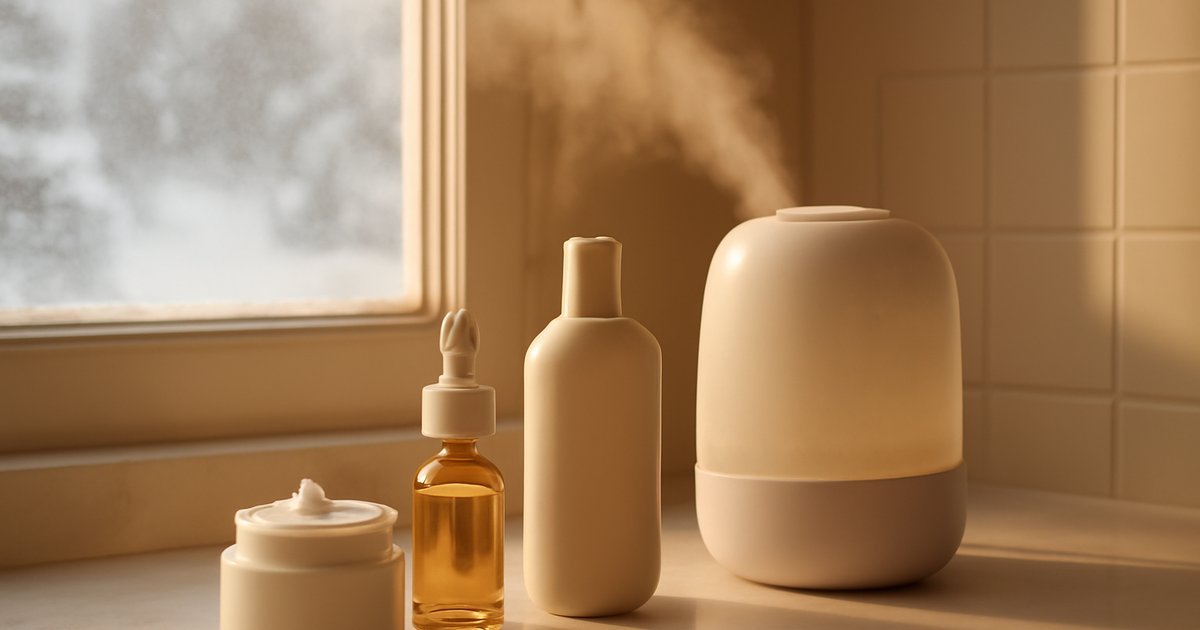
Forgetting to run a humidifier. No product can fully compensate for air that’s sucking moisture out of your skin all night. A bedroom humidifier that maintains 40-50% indoor humidity can genuinely improve your skin’s baseline hydration level from the inside out. It’s not a glamorous skincare tool, but dermatologists consistently recommend it as one of the most impactful changes for winter skin.
Switching your entire routine at once. If you introduce four new products in November, you won’t know which one is helping or causing a reaction. Transition one product at a time, giving each at least a week before adding the next.
Drinking less water because you’re not sweating. Dehydration affects your skin from the inside too. Cold weather dulls your thirst response, but your body still needs consistent hydration. Aim for at least 64 ounces of water daily — warm herbal teas count.
Frequently Asked Questions About Winter Skincare
Should I switch moisturizers every winter, or just use more of the same one?
It depends on your moisturizer. If your current formula has a light, gel-like texture, you’ll likely need to switch to something creamier with richer emollients. If you’re already using a barrier cream with ceramides or shea butter, you might just need to apply a slightly thicker layer or add an occlusive on top.
Is it normal for skin to get oilier in winter?
Actually, oily skin often becomes more balanced or even drier in winter, not oilier. What can look like excess oil is sometimes the skin overcompensating after being stripped by harsh cleansers or cold air. If your skin appears shiny but feels tight, that’s a classic sign of dehydration — your sebaceous glands are overproducing oil to compensate for missing moisture.
Can I use retinol in winter?
Yes, and many dermatologists consider winter an ideal time to start retinol because sun exposure is lower. Pair it with extra moisture support: apply a hydrating serum before your retinol and a rich moisturizer after. If your skin shows signs of irritation, reduce frequency rather than stopping entirely.
Why does my skin react to products in winter that it was fine with in summer?
A compromised skin barrier is far more reactive than a healthy one. Products that were neutral or beneficial in summer can cause stinging, redness, or breakouts in winter simply because the barrier isn’t filtering irritants as effectively. Scale back actives and focus on barrier repair first — most sensitivity resolves within two to four weeks once the barrier is healthy again.
Do I really need to change my routine if I live somewhere warm?
If you’re in Florida, Southern California, or Texas, the temperature drop is less dramatic — but indoor heating still dries out air significantly, and humidity drops in most US regions through winter. At minimum, swap to a slightly richer moisturizer and reassess your cleansing step. Full seasonal overhauls are mainly for those in cold, dry, or high-altitude climates.
Your Skin Deserves Seasonal Care, Not Just Seasonal Clothes
We swap out our wardrobe when the seasons change without a second thought. Our skincare deserves the same intuitive adjustment — because the environment our skin lives in changes just as dramatically as the temperature outside.
A smart winter skincare routine isn’t complicated. It’s gentler cleansing, layered hydration, consistent SPF, dialed-back exfoliation, and a few simple lifestyle shifts that support your skin from the inside out. None of these changes require a complete product overhaul or a luxury budget — they require understanding what your skin actually needs when the cold moves in.
Start with one change this week. Swap your cleanser, add a humidifier, or trade your gel moisturizer for a cream. Build from there. By mid-season, your skin won’t just be surviving the cold — it’ll be thriving through it.