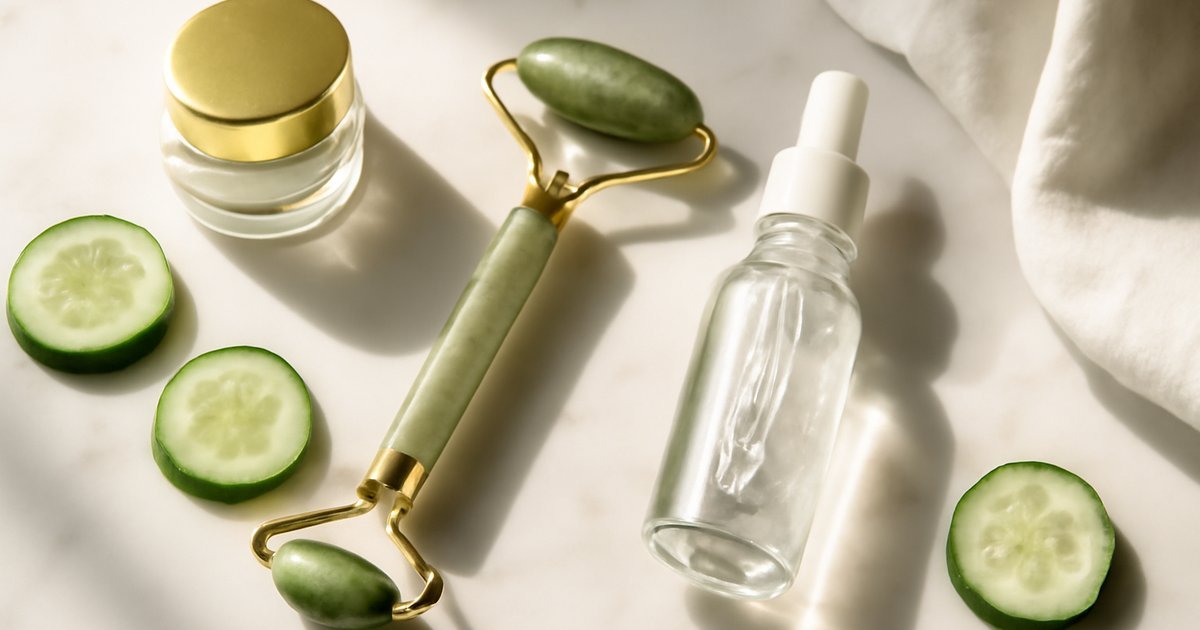
I started using eye cream at 32 after noticing lines I couldn’t unsee — here’s what I wish someone had told me first.
The Eye Area Is Not Like the Rest of Your Face
A few years ago, I caught myself squinting at a photo from a friend’s birthday dinner. The picture was fine — good lighting, everyone smiling. But I couldn’t stop staring at the corners of my own eyes. The fine lines weren’t deep. They weren’t dramatic. But they were there, and they hadn’t been before.
That’s when I finally stopped skipping the eye cream step. And honestly? I had no idea what I was doing at first.
If you’ve been wondering whether eye cream is just a marketing gimmick or something your routine genuinely needs, you’re asking the right question. In this guide, you’ll learn why the skin around your eyes needs specific care, what ingredients actually work, how to apply eye cream correctly (most people don’t), and which mistakes are quietly making things worse.
No fluff. No miracle promises. Just what dermatologists and the research actually back up.
Why the Eye Area Deserves Its Own Product
Here’s the honest truth: a good moisturizer can do a decent job around the eyes. But the skin in that area is fundamentally different from the rest of your face, and that difference matters.
The skin under and around your eyes is about 40% thinner than the skin on your cheeks or forehead, according to research published in the journal Skin Research and Technology. That’s not a small margin. Thinner skin means less natural protection, faster moisture loss, and greater sensitivity to irritating ingredients that your cheeks would handle just fine.
It also means that puffiness, dark circles, and fine lines show up there first — and show up more clearly. The eye area has fewer oil glands than the rest of your face, which makes it prone to dryness even in people with oily skin. And because you blink roughly 10,000 times a day, that tissue is under near-constant mechanical stress.
This doesn’t mean you need to spend $150 on a luxury eye cream. But it does mean that thinning, dryness, and early signs of aging around the eyes aren’t imagined — they’re structural. Treating that area the same as your forehead often isn’t enough.
What Ingredients in Eye Creams Actually Do Something
Walk down any beauty aisle and you’ll find eye creams promising to de-puff, brighten, firm, smooth, and hydrate — sometimes all at once. The reality is more nuanced. Different ingredients target different concerns, and no single formula does everything well.
Here’s a breakdown of what the evidence supports:
For fine lines and firmness: Retinol is the gold standard, backed by decades of clinical research. Even at lower concentrations — the kind safe for the delicate eye area — retinol has been shown to stimulate collagen production and smooth texture over time. If you’re new to it, look for eye creams with 0.025% to 0.05% retinol and build slowly. Our skin barrier repair guide covers how to avoid the irritation that often comes with starting retinoids.
For hydration and plumping: Hyaluronic acid draws moisture into the skin and temporarily fills in the look of fine lines. Peptides — especially palmitoyl tripeptide-5 and acetyl hexapeptide-3 — signal the skin to produce more collagen, according to findings reviewed by Mayo Clinic dermatologists. These are gentler options for those who can’t tolerate retinol.
For dark circles: This is where most eye creams overdeliver on claims. Vitamin C (ascorbic acid) can help with pigmentation-related darkness. Caffeine reduces temporary puffiness by constricting blood vessels. Niacinamide brightens over time. But dark circles caused by genetics, blood vessel visibility, or bone structure won’t fully respond to topical products — and no cream will tell you that on the label.
For puffiness: Caffeine is genuinely effective for morning puffiness, but the results are temporary. Cooling applicators (rollerball tips, metal wands) help too, but they’re mechanism is physical, not chemical.
The short version: match the ingredient to your actual concern, not the marketing copy on the front of the box.
How to Apply Eye Cream the Right Way
This is where most people go wrong — and it’s not their fault. Application instructions are often vague or skipped entirely.
First, the amount: a pea-sized amount is usually too much for both eyes combined. You want a rice grain’s worth per eye. Using more doesn’t increase effectiveness; it increases the chance of the product migrating into your eyes and causing irritation.
Second, placement: apply along the orbital bone — the bony ridge just below your eye socket — not directly on the lower lash line or eyelid. The product will migrate upward naturally with body heat. Applying too close to the eye increases sensitivity and potential irritation.
Third, the technique: use your ring finger. It’s your weakest finger, which means the least amount of tugging on already-fragile skin. Pat gently in small dots from the inner corner outward. Never rub or drag.
Fourth, timing: apply eye cream before your moisturizer, on clean skin, so it can absorb fully without being diluted. If you’re using a retinol eye cream, nighttime is best. Vitamin C or caffeine-based formulas work well in the morning.
And yes — the upper eyelid counts too, especially if you’re dealing with crepey or dry skin there. As long as the formula is ophthalmologically tested, it’s generally safe for the upper lid.
Building Eye Care Into Your Broader Routine
Eye cream isn’t a standalone solution. It works best as part of a routine that also addresses overall skin health. If you’re skipping SPF around the eyes, you’re undoing a lot of good work — UV exposure is the number one driver of premature aging in that area, according to the American Academy of Dermatology.
A 2025 consumer survey from Consumer Reports found that adults who consistently used broad-spectrum SPF 30 or higher around the eyes (not just on the cheeks and forehead) reported significantly fewer visible signs of aging in that area after one year compared to those who didn’t. Most people apply sunscreen but stop an inch below the eye — that gap matters.
Sleep, hydration, and screen habits also play a direct role. Chronic poor sleep raises cortisol, which breaks down collagen. Excessive screen time causes squinting, which deepens crow’s feet over time. These aren’t things any eye cream can fully compensate for.
If you want a more complete picture of how to care for your skin as a whole system, our guide on holistic skincare from within is worth reading alongside this one. And if you’re building out your full body routine, our head-to-toe body skincare guide covers everything from neck to feet.
Common Eye Cream Mistakes That Make Things Worse
Even well-intentioned routines can backfire. Here are the most common mistakes to avoid:
Using too many active ingredients at once. Layering a retinol eye cream with a vitamin C serum and a strong exfoliating toner in the same routine is a recipe for irritation. The eye area is sensitive. Stick to one active at a time in that zone, and rotate if needed.
Expecting results in a week. Collagen-stimulating ingredients take 8 to 12 weeks of consistent use before visible changes appear. If you’re switching products every few weeks because “nothing is working,” nothing ever will. Give a formula a full two to three months before judging it.
Applying it in the wrong order. Eye cream goes on before moisturizer and after any serums. Applying it after a thick moisturizer blocks absorption and reduces effectiveness.
Using a formula meant for the face, not the eyes. Some high-strength serums — especially those with glycolic acid, benzoyl peroxide, or high-concentration retinoids — are too potent for periorbital skin. Always check if a product is formulated and tested for the eye area before applying it there.
Skipping the upper lid. Most people apply eye cream only under the eye. The upper lid and outer corners lose collagen just as fast, especially with age. If your formula is gentle enough, include those areas.
Rubbing instead of patting. This one bears repeating. Repeated rubbing stretches and damages the skin over time. Gentle pressure, always.
Frequently Asked Questions About Eye Cream
At what age should I start using eye cream?
Most dermatologists suggest starting in your mid-to-late 20s as a preventive measure, especially if you spend a lot of time outdoors or in front of screens. You don’t need to wait until you see lines. Hydrating eye creams are appropriate at any age; retinol formulas are typically recommended for adults 30 and older.
Can I use regular face moisturizer around my eyes?
You can, especially if it’s gentle and fragrance-free. But it may not deliver enough targeted hydration for the thinner eye-area skin, and some face moisturizers contain ingredients (like fragrance, strong acids, or high-dose retinoids) that can irritate the eye area. A dedicated eye cream is formulated specifically to be safer and more effective for that zone.
Does eye cream help with dark circles?
It depends on the cause. Pigmentation-related darkness can improve with vitamin C and niacinamide over time. Vascular darkness (the bluish kind from blood vessel visibility) responds somewhat to caffeine and vitamin K. Structural dark circles caused by genetics or under-eye hollowness won’t be resolved by topical products alone.
How long does it take for eye cream to show results?
For hydration and temporary puffiness, you may notice a difference within a few days. For longer-term improvements in lines, firmness, or pigmentation, expect 8 to 12 weeks of consistent use before drawing conclusions.
Is it safe to use eye cream on the eyelid itself?
It depends on the formula. Eye creams labeled as ophthalmologically tested are generally safe for the upper lid. Avoid applying any product directly to the lash line or in the eye itself. If you have sensitive eyes or wear contact lenses, check with your dermatologist before using retinol-based eye products near the lid.
Your Eyes Deserve a Little More Attention
Eye cream isn’t magic, and anyone who tells you otherwise is selling something. But it’s also not just a luxury gimmick. When you choose the right formula for your actual concern, apply it correctly, and give it real time to work, it genuinely makes a difference.
Start simple: a hydrating, peptide-based eye cream used consistently twice a day is a solid foundation for most adults. Add SPF. Get your sleep. And resist the urge to over-layer.
The skin around your eyes works hard every single day. A little focused attention — with the right product and realistic expectations — goes a long way.