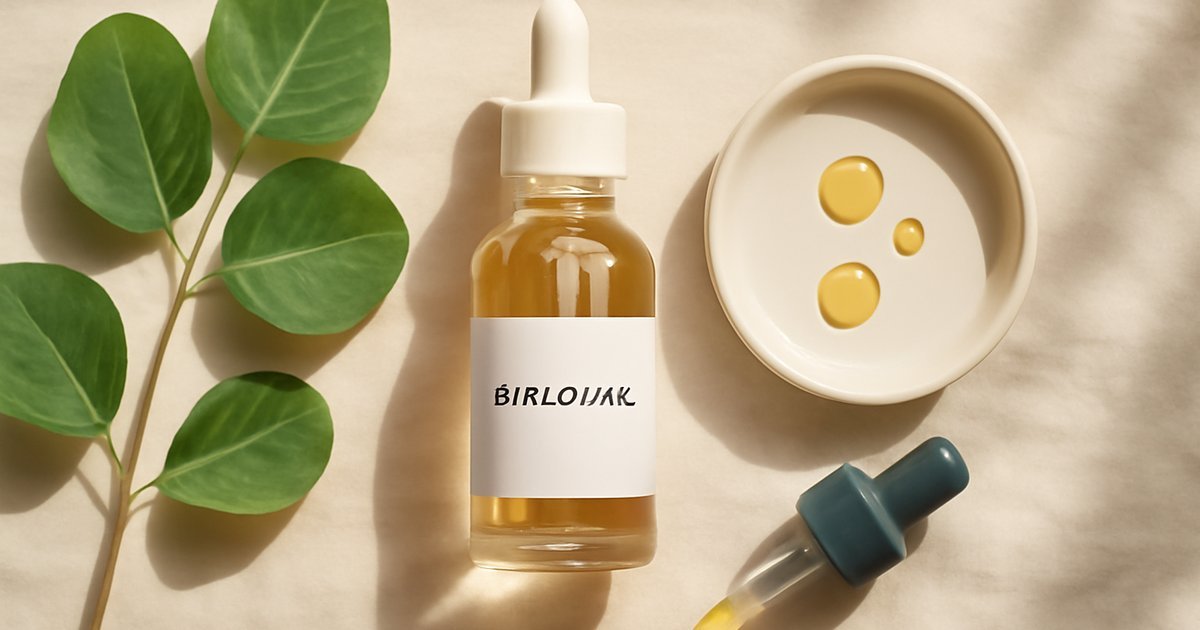
I switched to bakuchiol after two months of red, peeling skin from retinol — and I haven’t looked back since.
If you’ve ever tried retinol and spent the next week hiding your face under foundation because of the flaking, the redness, or that tight, angry feeling your skin gets — you’re not alone. Retinol is widely considered the gold standard for anti-aging, but for a huge portion of adults, it’s simply too harsh to use consistently.
That’s where bakuchiol comes in. Pronounced buh-KOO-chee-ol, this plant-derived ingredient has been quietly gaining serious traction in the skincare world — and not just as a trendy buzzword. Dermatologists are paying attention, studies are backing it up, and everyday people with sensitive, reactive, or combination skin are reporting real results without the irritation.
In this guide, you’ll learn exactly what bakuchiol is, how it compares to retinol, who it works best for, and how to actually add it to your routine in a way that makes sense for your skin and your lifestyle. No hype, no vague promises — just honest, practical information.
Why Bakuchiol Is Having a Major Moment in Skincare
The demand for effective but gentler skincare has never been higher. According to a 2024 survey by the American Academy of Dermatology, nearly 40% of adults who try retinol discontinue use within the first three months due to irritation, sensitivity, or lifestyle inconvenience.
That’s a huge number of people who want anti-aging results but can’t tolerate the most popular solution. Enter bakuchiol — a natural compound extracted from the seeds and leaves of the Psoralea corylifolia plant, used in Ayurvedic and traditional Chinese medicine for centuries.
What makes bakuchiol genuinely interesting isn’t just that it’s “natural” — it’s that it actually functions similarly to retinol at a cellular level, stimulating the same retinol-response genes involved in cell turnover and collagen production, according to a landmark study published in the British Journal of Dermatology. And it does this without the photosensitivity, without the initial purging phase, and without the strict storage and application rules that make retinol feel like a part-time job.
For adults aged 25 to 55 who are balancing careers, families, and routines that simply don’t have room for downtime skin, that trade-off matters enormously.
Bakuchiol vs. Retinol: What’s Actually Different
This is the comparison everyone wants. Let’s be honest about both sides — because bakuchiol isn’t a perfect replacement for everyone, and pretending otherwise would be doing you a disservice.
What they share: Both bakuchiol and retinol have been shown to improve fine lines, skin texture, hyperpigmentation, and overall firmness with consistent use. The 2019 British Journal of Dermatology clinical trial directly compared the two and found that bakuchiol produced comparable results to 0.5% retinol over 12 weeks — with significantly less peeling and stinging.
Where retinol wins: If you have resilient, oily skin and want the fastest possible results for deeper wrinkles or significant sun damage, prescription-strength retinoids (like tretinoin) still have a stronger evidence base and faster visible impact. Retinol, especially at higher concentrations, tends to produce more dramatic short-term results.
Where bakuchiol wins: For sensitive, dry, or reactive skin types — and for anyone who is pregnant (retinol is generally avoided during pregnancy) — bakuchiol is a genuinely viable option. It can be used morning or night, doesn’t break down in sunlight, doesn’t require the same careful buffering technique, and can be layered with a wider variety of active ingredients.
If you’ve ever read our guide on ceramides in skincare and understood how supporting your skin barrier matters, bakuchiol fits neatly into that philosophy — it builds up rather than strips down.
The honest bottom line: bakuchiol is slower than retinol for dramatic results, but it’s far more sustainable for the long haul — which is actually what produces the best skin over time.
Who Should Actually Use Bakuchiol
Not every skincare ingredient is for every person, and bakuchiol is no exception. But its tolerance profile is notably broad.
Best candidates for bakuchiol:
- Adults with sensitive or easily irritated skin who have struggled with retinol
- People with dry or dehydrated skin (bakuchiol doesn’t increase transepidermal water loss the way retinol can)
- Pregnant or breastfeeding individuals looking for a safer anti-aging option (always confirm with your OB-GYN)
- Those in their late 20s or early 30s who want preventive anti-aging without starting on a strong retinoid
- Anyone with rosacea or eczema-prone skin who still wants to address fine lines and dullness
Bakuchiol can still work for you if: You have oily or combination skin and want a gentler daily option, or if you’re already using retinol occasionally and want to add bakuchiol on alternate nights to boost results with less cumulative irritation — a strategy some dermatologists recommend.
According to Dr. Shereene Idriss, a board-certified dermatologist frequently cited in Allure and Vogue, bakuchiol is particularly useful as a “bridge ingredient” — something you can start with before graduating to retinol, or use indefinitely if retinol simply doesn’t suit your skin.
One group that should still consult a dermatologist first: anyone dealing with active, cystic acne. While bakuchiol has some anti-inflammatory and antimicrobial properties, it’s not a treatment for acne in the clinical sense. Check out our acne-prone skin care routine guide for a more targeted approach if that’s your primary concern.
How to Add Bakuchiol to Your Skincare Routine
One of the biggest advantages of bakuchiol is how easy it is to incorporate — no strict rules, no 20-minute wait times, no “sandwich method.” But a thoughtful approach still gets you better results.
Step 1: Choose the right formula. Bakuchiol is available as a standalone serum, blended into moisturizers, or combined with other actives. For beginners, a dedicated serum at 0.5% to 1% concentration is the most straightforward starting point. Look for formulas that also include squalane or hyaluronic acid for added hydration — your skin will thank you.
Some solid options widely reviewed by Allure and Byrdie include Biossance Squalane + Phyto-Retinol Serum, Herbivore Bakuchiol Retinol Alternative Serum, and REN Clean Skincare’s Bio Retinoid line.
Step 2: Placement in your routine. Apply bakuchiol serum after cleansing and toning, before your moisturizer. Because it’s photostable, you can use it morning or evening — or both, if your skin responds well. Start with once daily and build from there.
Step 3: Layering dos and don’ts. Bakuchiol plays well with vitamin C, niacinamide, hyaluronic acid, and peptides — which makes it unusually versatile. What you’ll want to avoid layering on the same application: strong exfoliating acids like glycolic or lactic acid at high concentrations. That combination can tip sensitive skin into irritation territory.
For a broader look at how actives interact, our peptides in skincare guide dives into how supportive ingredients can compound your results without overwhelming your skin.
Step 4: Expectations and timeline. Honest truth — don’t expect miracles in week one. Most users report noticeable improvements in skin texture and tone around the 8-to-12-week mark, with continued improvement over six months. Consistency matters far more than concentration here.
Common Mistakes People Make With Bakuchiol
Even with a gentler ingredient, there are real ways to get less than optimal results. Here are the pitfalls worth knowing before you start.
1. Expecting retinol-speed results. Bakuchiol works — but it works at its own pace. If you quit after three weeks because you don’t see a dramatic change, you’re leaving results on the table. Set a 90-day benchmark and track your skin with photos, because changes happen gradually and we often don’t notice them until we compare.
2. Skipping sunscreen because bakuchiol is photostable. This is a misunderstanding worth clearing up. Bakuchiol itself isn’t photosensitizing like retinol — but that has nothing to do with whether you need SPF. Daily broad-spectrum sunscreen is non-negotiable for any anti-aging routine. Full stop.
3. Buying the cheapest option without checking the concentration. Some products label themselves “bakuchiol” when they contain a fraction of the therapeutic amount. Look for formulas with at least 0.5% bakuchiol — the concentration used in clinical studies. Reading ingredient labels matters here.
4. Overloading actives at the same time. The gentleness of bakuchiol sometimes makes people feel they can stack every active they’ve been wanting to try. Resist the urge. Introduce bakuchiol solo for at least two weeks before adding anything else new — so you know what’s working and what isn’t.
5. Using it inconsistently. Skipping days frequently, using it once a week, or abandoning it when life gets busy will undercut your results. Even three to four consistent applications per week is far better than sporadic use with no pattern.
Frequently Asked Questions About Bakuchiol
Is bakuchiol safe to use during pregnancy?
Bakuchiol is widely considered a safer alternative to retinol during pregnancy, since retinoids are generally avoided due to potential risks. However, “generally considered safe” is not the same as medical clearance — always check with your OB-GYN before adding any new active to your routine while pregnant or breastfeeding.
How long does it take to see results from bakuchiol?
Most people notice improvements in skin texture and smoothness around weeks six to eight, with more significant changes in fine lines and tone visible around the 12-week mark. Patience and consistency are everything with this ingredient.
Can I use bakuchiol and retinol together?
Yes — many dermatologists actually recommend this pairing for people who tolerate retinol but want to extend its benefits. You can use bakuchiol in the morning and retinol at night, or alternate nights. The anti-inflammatory properties of bakuchiol may even help offset some retinol irritation.
Is bakuchiol good for dark spots and hyperpigmentation?
Yes, bakuchiol has shown meaningful effects on hyperpigmentation in clinical studies, comparable to retinol’s impact on uneven skin tone. For faster results on significant dark spots, you may want to pair it with a dedicated vitamin C serum in your morning routine.
What’s the best bakuchiol percentage to look for?
The clinical research that supports bakuchiol’s efficacy used concentrations of 0.5% to 1%. Products with less than 0.5% may not deliver the same results. Most reputable brands will list the percentage clearly — if they don’t, that’s worth noting.
The Bottom Line on Bakuchiol
Bakuchiol isn’t a miracle ingredient — but it’s a genuinely effective one, and for many adults, it’s the sustainable, skin-friendly path to the anti-aging results they’ve been chasing without the frustration that comes with traditional retinol.
If you’ve tried retinol and struggled, or if you’ve been curious about where to start with anti-aging actives, bakuchiol is a solid, science-backed place to begin. Give it a real shot — consistent use for at least 10 to 12 weeks — and track your progress with honest before-and-after photos.
Your best skin doesn’t require suffering through a product that doesn’t work for you. Sometimes the gentler path is also the smarter one.