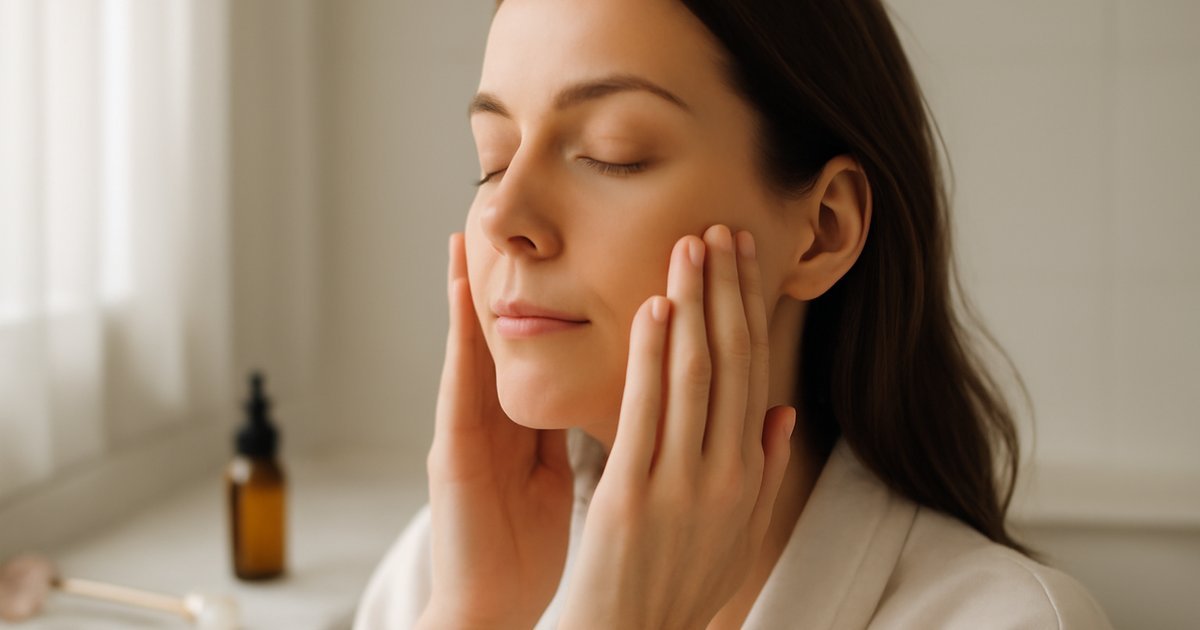
The morning I noticed my face looking perpetually puffy and dull — even after eight hours of sleep — was the morning I finally took facial massage seriously.
I’d been doing everything right, or so I thought. Hydrating serums, SPF every single day, a solid nighttime routine. But something was still off. My skin looked tired, a little swollen around the jaw and under the eyes, and no amount of concealer was fixing the underlying flatness to my complexion.
A dermatologist I consulted mentioned something I hadn’t considered: lymphatic congestion. The lymphatic system, she explained, doesn’t have a pump the way your cardiovascular system does. It relies on movement — including intentional facial massage — to drain fluid and clear out metabolic waste that can make your skin look puffy and lackluster.
That conversation changed how I think about skincare entirely. In this guide, you’ll learn exactly how facial massage for lymphatic drainage works, the techniques that actually deliver results, the tools worth buying (and the ones that aren’t), and the mistakes that could make things worse instead of better.
Why Lymphatic Drainage Facial Massage Actually Matters
Your lymphatic system is essentially your body’s internal drainage network. It carries waste, toxins, and excess fluid away from tissues and toward lymph nodes where they’re filtered out. The problem? Your face has a dense network of lymphatic vessels, and they can easily become sluggish — especially if you sleep on your side, consume a high-sodium diet, sit at a desk all day, or experience chronic stress.
According to the American Academy of Dermatology, facial puffiness — particularly around the eyes and jawline — is one of the most common cosmetic complaints among adults in their 30s and 40s. Much of that puffiness isn’t fat or aging; it’s fluid retention that never fully drains.
A 2018 study published in the journal Complementary Therapies in Clinical Practice found that manual lymphatic drainage techniques significantly reduced facial swelling in participants after consistent application, with results visible in as little as two weeks. For a US adult navigating long work hours, high-stress environments, and not enough water, that’s meaningful data.
Beyond depuffing, regular lymphatic facial massage has been linked to improved skin tone, reduced tension headaches, better absorption of skincare products, and even a subtle but real boost in collagen circulation. It’s one of the few skincare techniques that works with your body’s biology rather than just layering products on top of it.
The Core Techniques: How to Do It Correctly
The key principle to understand before you start: lymphatic drainage massage uses very light pressure. Unlike a deep-tissue massage or aggressive gua sha scraping, lymphatic work should feel almost like you’re barely touching your face. The lymphatic vessels sit just beneath the skin surface, and heavy pressure actually collapses them, making drainage harder, not easier.
Here’s a step-by-step sequence that dermatologists and licensed estheticians commonly recommend:
Start at your neck. Before touching your face, use four fingers on each hand to make gentle downward strokes along the sides of your neck, from just below your ears to your collarbone. Do this 10 times on each side. You’re essentially opening the drain before the water starts flowing.
Move to the jaw and chin. Using your knuckles or the flat pads of your fingers, work along the jawline from chin to ear using small, light circular motions. Then use two fingers to sweep gently from the center of your chin outward and downward toward your neck lymph nodes. Repeat 6-8 times.
Address the cheeks and under-eye area. This is where most fluid tends to pool. Place your ring fingers — they naturally apply the least pressure — just below the inner corners of your eyes. Sweep outward toward your temples using feather-light strokes, then continue down toward your ears and neck. Never drag or pull. Think of it as guiding water downhill.
Finish at the forehead. Use both palms to apply gentle pressure from the center of your forehead outward toward your temples, then sweep down toward your ears. This final step closes the sequence and directs everything toward the major lymph nodes at the jaw and neck.
The entire routine takes about 5-7 minutes and is most effective when done in the morning, when puffiness tends to be at its peak.
Tools Worth Trying — and What to Skip
Your hands are genuinely the best tool for lymphatic drainage because you can control pressure intuitively. That said, a few tools do offer real benefits when used correctly.
Rose quartz or jade rollers have been trending for years, and while the TikTok marketing around them is exaggerated, Consumer Reports notes that rollers can be useful for product application and light depuffing when kept cold in the refrigerator overnight. The cooling effect constricts blood vessels temporarily, which helps reduce inflammation. Just don’t expect dramatic structural change from a roller alone.
Gua sha stones are more effective than rollers for moving lymphatic fluid because the flat, angled edge allows you to cover more surface area with a single stroke. A facial-grade gua sha tool made from rose quartz or bian stone is a solid investment — typically $15-$45 — and when used with the correct light-handed technique, it genuinely amplifies the drainage effect. The critical mistake most people make is pressing too hard. If your skin is turning red from the tool, you’re using too much pressure for lymphatic purposes.
Microcurrent devices like the NuFACE Trinity are in a different category entirely. These FDA-cleared tools use low-level electrical current to stimulate facial muscles and improve circulation. A 2021 clinical study cited by the manufacturer showed a measurable reduction in facial puffiness and improved contour after consistent use. At $300+, they’re a significant investment, but for adults experiencing significant facial sagging or chronic puffiness, the results are more substantial than manual massage alone.
Skip: vibrating massage wands with aggressive oscillation, cupping sets marketed for the face (too intense for lymphatic work), and anything that creates sustained redness or discomfort. If it hurts or leaves marks, it’s counterproductive.
Want to understand how your skin barrier plays into all of this? How to Repair Your Skin Barrier and Keep It Strong covers the foundation that makes every skincare technique more effective.
Building It Into Your Skincare Routine
One of the most common questions I hear is: when in my routine does facial massage actually fit? The answer depends on your goals and the products you’re using.
For morning routines, lymphatic drainage massage works best after cleansing and before applying serum. Your skin is slightly damp, which reduces friction, and you’re addressing overnight fluid accumulation at its peak. Apply a few drops of a lightweight facial oil — squalane, rosehip, or a dedicated facial massage oil — and work through the sequence before your serums and SPF.
For evening routines, massage after your first serum layer, while your skin is still tacky. The massage motion actually helps active ingredients penetrate more efficiently by increasing local circulation. This is particularly beneficial if you’re using treatments like niacinamide or peptides that support barrier function and cellular repair. Speaking of which, Niacinamide: The One Ingredient Your Skin Is Missing is a great read if you haven’t added it yet.
Consistency matters far more than duration. Five minutes three to five times per week will outperform a 20-minute session done once a month. If you’re traveling, skipping a tool and doing the hand technique in the shower is completely valid — the steam and warm water actually support lymphatic flow.
One important note: if you have active breakouts, open wounds, rosacea flares, or any skin condition that involves inflammation or broken capillaries, check with a dermatologist before starting facial massage. Moving fluid through already-irritated tissue can sometimes spread bacteria or worsen redness.
Common Mistakes That Undermine Your Results
Facial massage for lymphatic drainage is one of those techniques where more effort genuinely works against you. Here are the specific mistakes that keep people from seeing results:
Using too much pressure. This is the number one error. Heavy pressure collapses the superficial lymphatic vessels you’re trying to stimulate. The touch should feel gentle enough that you could do it on your eyelid without discomfort. If you’re sculpting or deeply massaging muscle tissue, you’ve crossed out of lymphatic territory.
Massaging in the wrong direction. Lymphatic flow moves downward and outward toward the lymph nodes at your jaw, neck, and collarbone. Massaging inward or upward without completing the downward drainage sweep just moves congestion around rather than clearing it. Always finish each stroke with a downward motion toward the neck.
Skipping the neck prep. Most tutorials jump straight to the face, but starting without opening the neck nodes is like trying to drain a bathtub with the stopper still in. Neck strokes first, every time.
Dry dragging on skin. Performing massage without an oil or balm causes mechanical friction that can stretch and irritate skin over time. Always have a slip layer, even if it’s just a thin layer of your regular moisturizer.
Expecting overnight results. Lymphatic drainage is cumulative. You may notice some immediate depuffing after your first session, but the real tonal and textural improvements come after two to four weeks of consistent practice. If you stop after three days because your face doesn’t look different, you’ve given up too soon.
And if you’re working on your overall approach to skin health beyond just technique, Holistic Skincare: Nurture Your Glow from Within is worth bookmarking alongside this guide.
Frequently Asked Questions
How often should I do lymphatic drainage facial massage?
Most dermatologists recommend 3-5 times per week for noticeable results. Daily is fine if your technique is gentle enough. Think of it like stretching — frequency at low intensity beats infrequent intense sessions.
Can facial massage really reduce puffiness permanently?
It can significantly reduce chronic puffiness caused by fluid retention, especially if you’re consistent and also address lifestyle factors like sodium intake, hydration, and sleep position. It won’t change structural features or fat distribution, and results require ongoing maintenance.
Is facial massage safe during pregnancy?
Gentle lymphatic facial massage is generally considered safe during pregnancy, but always consult your OB-GYN first. Avoid deep pressure around the jaw or neck, and skip any electrical tools like microcurrent devices unless specifically cleared by your provider.
What’s the best oil to use for facial massage?
Squalane is the most universally recommended option because it’s non-comedogenic, stable, and suitable for almost all skin types. Rosehip oil works well for those focused on anti-aging. Avoid heavy coconut oil or mineral oil if you’re acne-prone.
Can I do lymphatic facial massage if I have rosacea?
It depends on your current state. During a flare-up, massage can worsen redness and inflammation. During calmer periods, very gentle techniques may be tolerable, but this is one to discuss directly with your dermatologist rather than self-experiment.
Your Next Step Toward a Clearer, Less Puffy Face
Facial massage for lymphatic drainage isn’t a miracle — but it is a genuinely effective, evidence-supported technique that most people simply don’t know how to do correctly. The barrier to entry is low: your hands, a few drops of oil, and five minutes you probably already spend scrolling in the morning.
Start with the neck-first sequence three mornings this week. Notice how your face looks in the mirror afterward. Pay attention to whether that chronic jawline tension or under-eye puffiness shifts even slightly. Most people feel a difference before they see it.
The skin you’re working toward isn’t about adding more products. Sometimes it’s about helping your body do what it’s already designed to do — just with a little intentional support.